Country: Nigeria

All On and partners launch $10m global aggregated renewable energy procurement programme in Nigeria
Nigerian impact investment company, All On, Odyssey Energy Solutions, and the recently launched Global Alliance for People and Planet (The Alliance) have launched this month a global aggregated procurement programme for renewable energy companies in Nigeria. The initiative is supported by a $10 million financing facility managed by All On. Dubbed “Demand Aggregation for Renewable Technology (DART)”, the programme will ensure that affordable, high quality solar products reach the communities most in need in Nigeria. If successful, the programme will then be piloted in four additional countries in Africa. In its core, the DART programme combines demand pooling and aggregated purchasing of solar equipment, access to affordable finance, and coordinated logistics processes to unlock economies of scale for solar companies and achieve cost savings for end users. The $10m All On-managed finance facility will provide debt funding for solar companies already approved by the Rural Electrification Agency (REA) for the Nigeria Electrification Program (NEP) to purchase lower-cost solar equipment through the DART.
Read more »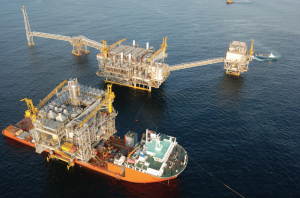
What are the shallow water assets Seplat Energy is trying to acquire from ExxonMobil in Nigeria?
Following press speculation, Seplat Energy has finally confirmed today that it is indeed in competitive discussions to acquire ExxonMobil’s Nigerian shallow water business along with an undisclosed partner. While deliberations are still ongoing and have no certainty to conclude, such an acquisition would be transformational for Seplat. The assets that Seplat is eyeing cover those of Mobil Producing Nigeria (MPN), the entity that operates a joint-venture with the state-owned Nigerian National Petroleum Corp. (NNPC). Via the NNPC, the Nigerian government has a 60% share while ExxonMobil holds the remaining 40%. The blocks can be broadly divided into the East Area that covers OMLs 67, 68 and 70 and the Yoho development on OML 104. All those shallow water assets hold significant amount of gas that would support Seplat Energy’s gas strategy. Nigeria’s East Area (OMLs 67, 68 & 70) The East Area relies on ExxonMobil’s Qua Iboe terminal for exports and produced an average of 177,000 barrels of oil per day (bopd) between January and July 2021, NNPC data shows. The area also remains one of the most successful flaring reduction and valorization projects in the Niger Delta. Source: NNPC Such developments notably included the Oso natural gas liquids (NGL) plant commissioned in 1998, and its expansion with the NGL II project in 2008. Between 2007 and 2011, both projects had notably contributed to a 70% reduction in flaring on the acreage. They also provide gas to the Bonny River Terminal, enabling production of key commodities such as LPG for the domestic and export markets. The Yoho Field Development (OML 104) The other key asset is OML 104, which contains the producing Yoho field. The $1.3bn shallow water Yoho development project came on stream in early 2003 via the Falcon FPSO which acted as an Early Production Sytem. The FPSO produced its last oil in February 2006 when full-field facilities came on stream. The development is targeting the development of 440 million barrels of recoverable oil resources from the Yoho and Awawa reservoirs. Oil is exported via the Yoho FSO terminal and OML 104’s production does not rely on ExxonMobil’s Qua Iboe Terminal like the rest of the MPN/NNPC JV fields do. In the first nine months of 2021, Yoho produced a maximum of 30,000 bopd according to DPR data. Source: DPR OML 104 has significant undeveloped gas reserves and could potentially see the deployment of a floating LNG (FLNG) unit in the near future. The license for the project was awarded to local company UTM Offshore in 2021.
Read more »
World Bank revises Nigeria’s growth projections upward and calls for bold policy reforms
As Nigeria’s economy is recovering at a faster-than-expected pace in 2021, the World Bank has revised its growth projects for the country upward. While the Bretton Woods institution initially predicted a GDP growth of 1.8% in 2021 and 2.1% in 2022, it now predicts it at 2.7% this year and 2.8% next year. The World Bank justifies this more optimistic forecast on the back of recent growth in services and manufacturing. “The growth of services was largely organic, albeit uneven: telecoms expanded robustly during the pandemic, while trade, transportation, and financial services also recovered,” it said in its Nigeria Development Update this month. However, the World Bank does note that the momentum of Nigeria’s reform agenda has waned and is currently undermining the country’s long-term growth prospects. As a result, its economy continues to grow at a slower pace than that of its neighbours. The report, titled “Time for Business Unusual,” notably says that the insufficient supply of foreign exchange (FX) issues, the unsustainable subsidy on premium motor spirit (PMS), burdensome trade restrictions, and the sizeable fiscal deficit financing by the Central Bank of Nigeria (CBN) are undermining the business environment, compounding underlying constraints on domestic revenue mobilization, foreign investment, human capital development, and the delivery of public services. Source: NBS The PMS subsidy remains a major challenge for the Nigerian economy, especially at a time when the country struggles to increase oil production. While oil prices are high, Nigeria has not fully benefited from them because of lower output, at the same time when PMS subsidies are soaring. The World Bank’s Development Update highlights urgent policy priorities that can be implemented over the next three to six months in four key areas: (1) eliminating the PMS subsidy while protecting poor and vulnerable households from any inflationary impact; (2) reducing inflation through a coordinated mix of exchange rate, trade, monetary and fiscal policies; (3) catalyzing private investment by enhancing foreign exchange management, easing trade restrictions, and fostering a better business environment; and (4) addressing fiscal pressures through enhanced domestic revenue mobilization and reducing the reliance on CBN deficit financing.
Read more »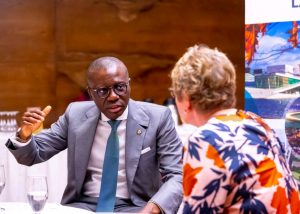
Nordic investors seek to invest into smart city projects across West Africa’s largest commercial city
The Nordic Nigeria Connect just closed in Lagos this week after welcoming delegations of investors from Norway, Denmark, Finland and Sweden. The conference was organized by Nordic countries to present several opportunities across waste and wastewater management, green energy and green transportation solutions across the State of Lagos. More importantly, the week highlighted Lagos’ leadership position in Nigeria when it comes to embracing sustainability. The State is in fact preparing a historic green bond issuance of NGN 25bn ($60m) under the Nigerian Green Bond Market Development Programme (NGBMDP). In order to modernize Lagos’ infrastructure, manage its waste and provide energy to its booming urban population, the state administration is looking at capital and technology from Europe. “Lagos generates on average 13,000 metric tonnes of waste day,” declared Governor Babajide Sanwo-Olu at the opening of the conference this week. “This challenge represents a significant opportunity for investors seeking to turn waste into wealth such as energy or fertilizers” Negotiations around new deals on energy supply were also high on the agenda, especially as Lagos seeks to become more independent from the national grid. Earlier this year, the state made a case for a new energy policy that would see it develop and grow its own electricity market. Finally, sustainable transportation solutions were advanced as a way to support modern mobility systems across Lagos. These include both the expansion of the state’s Lagos Rail Mass Transit System but also the conversion of its public buses into compressed natural gas (CNG). Deal making and networking was notably supported throughout the week by the Nigerian Norwegian Chamber of Commerce, a not-for-profit bilateral institution established in 2015 to support business and commercial ties between Norway and Nigeria.
Read more »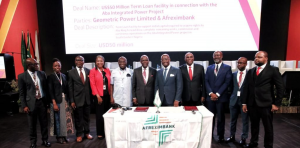
Nigeria: 188 MW Aba Integrated Gas-to-Power Project gets $50m boost from Afreximbank
Last week during the second Intra-African Trade Fair in Durban, the African Export-Import Bank (Afreximbank) signed a $50m term loan facility with Geometric Power Limited for its Aba Integrated Power Project in Nigeria. The facility will notably help finance the initial capital required to acquire rights to the Aba Ring Fenced Area within which electricity from the power plant will be distributed and sold. It will also support the completion of remaining works, and the commissioning and commencement of operations of the project. A Unique and Fully Integrated Gas-to-Power Project The Aba IPP has been in the making for quite some time and will be Nigeria’s first integrated and independent power utility. The project includes a 141 MW gas-fired power plant (licensed for 188 MW), a 27km gas pipeline, and a distribution utility selling power within a ring-fenced distribution network. The project is structured as an embedded electricity facility designed to generate and distribute its own electricity. Electricity will be generated by Geometric Power Aba Limited (GPAL), the entity that owns and operates the power station, but will be distributed by Aba Power Limited Electric (APLE). The former has a power generation license while the latter benefits from an electric distribution license. Gas feedstock will be supplied by the Shell Petroleum Development Co. (SPDC) joint-venture, with whom a gas supply and aggregation agreement (GSAA) was executed in late 2018. The agreement notably covers the supply of about 43 MMscfd of gas. “Being one of the only 24hr reliable power supplier, Aba IPP will revive moribund industries, power the Enyimba Economic City as well as markets such as the famous Ariaria International Market,” declared Geometric Power Chairman & CEO Prof. Bart Nnaji, who previously served as Nigeria’s Power Minister in 2011 and 2012.
Read more »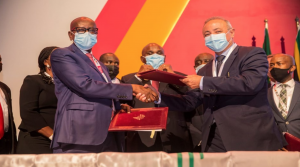
Afreximbank signs $2 billion in deals with Nigerian oil & gas companies
The African Export-Import Bank (Afreximbank) showed up for Nigeria’s oil sector this week in Durban, during the Intra-African Trade Fair 2021. The bank has signed three separate deals totaling almost $2bn with the state-owned Nigerian National Petroleum Corporation (NNPC), indigenous operator Eroton Exploration & Production and new Nigerian independent Mars Exploration & Production. A $1.04 bn exploration deal with NNPC The first agreement is a $1.04 billion facility with the NNPC to finance oil exploration in Nigeria. It notably notably comprises a pre-export/shipment finance facility underpinned by a forward sale agreement (FSA) and offtake contracts from the NNPC acting as the borrower and seller. Under the terms of the contract, NNPC will enter into an FSA within which it shall deliver 35,000 barrels of crude oil per day (bopd). The NNPC was represented by Umar I. Ajiya, Group Executive Director, Finance & Accounts while the Afreximbank was represented by Amr Kamel, Executive Vice President, Business Development & Corporate Banking. A Second Lending Facility to Eroton E&P The second agreement is a term-sheet that lays the basis for the approval of a $750m senior secured reserve-based lending facility with Eroton Exploration & Production, the Nigerian company that operates OML 18 with a 27% interest in the Niger Delta. IIt was signed by Chairman Onajite Okoloko. Other parties in the deal are Shell Western Supply & Trading and Midwestern Oil & Gas Company Limited. Midwestern is an indirect owner of Eroton E&P through its 60% ownership of Midwestern Leon Petroleum, which in turns owns Eroton E&P’s mother company Martwestern. Out of the full facility, $196m is expected to refinance Eroton’s current senior bank debt. The remaining is expected to help Eroton finance the acquisition of an additional 18% economic interest in OML 18 from Sahara Field Production Ltd (SFPL, 16.2%) and Bilton (1.85%). Afreximbank and Eroton have been working together since the Nigerian company acquired Shell’s interest in OML 18 back in 2015. The bank had then provided a $663m syndicated reserve base lending facility to Eroton. Financing AA&R’s Acquisition Spree The third and last deal is a $274m senior secured reserve-based lending facility to Mars Exploration & Production, a subsidiary of Nigeria’s AA&R Group. AA&R is in the process of acquiring several offshore licenses in Nigeria and details on the transaction are available within the Hawilti+ research terminal.
Read more »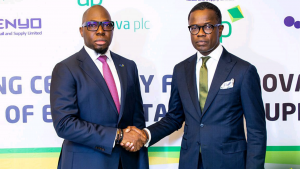
Ardova Plc completes acquisition of Enyo Retail & Supply Ltd in Nigeria
Nigerian energy and oil marketing company Ardova Plc has announced the completion of its 100% acquisition of Nigerian fuels retailing company Enyo Retail & Supply. Through this transaction, Ardova has grown its fuel retail stations by 95, bringing its total network in Nigeria to 545. The acquisition is part of ongoing consolidation in the Nigerian downstream market as oil marketers seek to achieve economies of scale to boost profitability. Earlier this month, RainOil also completed its acquisition of 63.6% of the shares of Eterna Plc though its investment arms, Preline Ltd (60.9%) and Norsworthy Investments (2.6%).
Read more »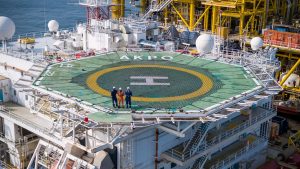
Africa Oil Corp. becomes cash positive less than two years after investment into Nigerian deep offshore
Africa Oil Corp.’s acquisition of a 50% interest in Petrobras Oil and Gas B.V (POGBV, now known as Prime) in 2020 for $520m is paying off. The Canadian independent has just become cash positive in Q3 2021, reporting a net cash position of over $15m. The performance was made possible thanks to AOC’s exposure to some of Nigeria’s biggest deep-water fields. When the Canadian independent acquired a 50% interest of POGBV last year, it benefited from an indirect 8% interest in the Chevron-operated OML 127 and 16% indirect interest in the TotalEnergies-operated OML 130 offshore Nigeria. These blocks contain the Agbami, Akpo and Egina deepwater fields, three of the continent’s biggest producing assets. Source: Africa Oil Corp. AOC started earning dividends from Q1 2020 onwards and benefited this year from the strong rebound in oil prices and the gradual lifting of OPEC quotas. Its average daily working interest production stood at 27,500 barrels of oil equivalent per day (boepd) in Q3 2021, generating two dividends worth $112.5m from Prime during the period. Since completing the acquisition of a 50% shareholding in Prime in January 2020, Africa Oil has already received nine dividends from Prime for a total amount of $350m. As a result, AOC was able to significantly reduce its corporate debt facility to only $23m, up from $141m at the start of the year. The company’s stock performance echoes that of its balance sheet. Its shares were trading at CAS$2.07 this morning, up from CAD$1.23 at the start of the year. Details on Africa Oil Corp’s projects across Africa along with the company’s financial and operational performances are available in the “Companies” section within your Hawilti+ research terminal.
Read more »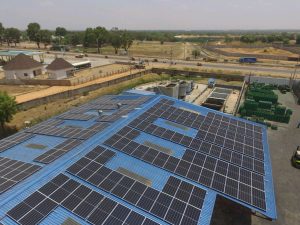
Nigeria’s leading beverages manufacturer goes full on solar
Seven-Up Bottling Company, Nigeria’s manufacturer of soft drinks such as Pepsi, Mirinda, Seven Up, H2oh!, and Mountain Dew, has decided to switch to solar as a primary day-time source of energy over all its Nigerian factories. The company has signed a deal with Daystar Power to install 10.5 MW of solar power systems for five more factories in the country. Earlier this year, both companies already partnered for the design, operations and management of almost 1.5 MW of solar power systems over SBC’s bottling plants in Kaduna and Kano. The five additional factories will comprise those of Abuja, Lagos (Ikeja), Ibadan and Ilorin, all expected to be powered by solar over the next six months. By 2022, SBC will be Nigeria’s largest industrial manufacturer to use solar energy in its operations. Both companies have also announced being in discussions to roll out solar energy as the primary daytime power source for SBC’s remaining two sites in Nigeria. According to Daystar Power, the solar power systems at the factories could provide over 50% of its total daytime power consumption depending on the installation size and amount of sunshine.
Read more »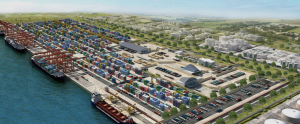
The Lekki Deep Sea Port is over 70% complete
The Lekki Deep Sea Port was over 70% as of late October this year, its promoters have revealed. The project’s construction and development is being undertaken by Lekki Port LFTZ Enterprise Limited (LPLEL), a special purpose vehicle promoted by the Tolaram Group and China Harbour Engineering Company Ltd (CHEC). CHEC injected US$221 million into LPLEL in March 2020 and became the company’s controlling shareholder with 52.5%. The remain shareholders are the Tolaram Group (22.5%), the Lagos State Government (20%) and the Nigerian Ports Authority (5%). LPLEL was awarded the concession for 45 years by the Nigerian Ports Authority (NPA) on a Build, Own, Operate and Transfer (BOOT) basis. Under the agreement, the company is required to develop, finance, build, operate and, at the end of the concession term, transfer the port to the NPA. All major infrastructure components are over 50% complete including land side infrastructure (55.38%), the quay wall (74.13%), the breakwater (74.13%) and the dredging and reclamation works (82.19%). Upon completion, Lekki Port will have a total of 3 container berths, 1 dry bulk berth and 3 liquid berths.
Read more »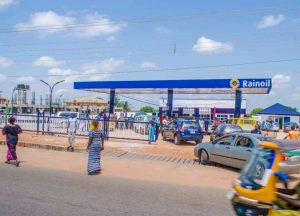
Nigeria: RainOil completes acquisition of majority stake in Eterna Plc
RainOil has completed its acquisition of 63.6% of the shares of Eterna Plc though its investment arms, Preline Ltd (60.9%) and Norsworthy Investments (2.6%). The Sale and Purchase Agreement (SPA) was executed on August 25th, 2021. The transaction had been reported in Hawilti’s Q3 M&A Watch, available within the Hawilti+ research terminal. The acquisition of Eterna will further consolidate RainOil’s market presence in Nigeria. Over the past two years, the Nigerian company has been investing heavily into its asset base which currently include three ultra-modern petroleum product storage deports in Delta, Cross River and Lagos, a 8,000 metric tonnes LPG storage facility in Lagos, over 100 retail outlets and a fleet of over 140 petroleum product tank trucks. The Nigerian downstream sector is going through significant consolidation as players seek to expand their reach and network to benefit from economies of scale in a market where PMS remains heavily subsidised and regulated. In January this year, Ardova Plc announced it was acquiring Enyo Retail & Supply, a private oil marketer with 95 retail stations in Nigeria.
Read more »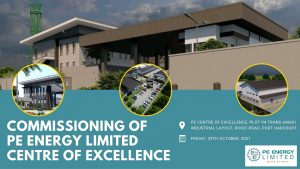
PE Energy opens new Centre of Excellence to support Nigerian content
Over the weekend, PE Energy officially opened its new Centre of Excellence for valves assembly, valves actuation, metering systems, pump and compressor solutions, process automation and control systems integration in Port Harcourt, Nigeria. The state-of-the-art facility covers over 11,000 m2 and was constructed by Megastar Technical Construction Co. It is set to become one of Africa’s best vendors agnostic center boosting the utilisation of indigenous materials and local talent in Nigeria. The Center of Excellence notably builds on PE Energy’s decades of experience in Nigeria and partnerships with some of the world’s leading original equipment manufacturers (OEMs) in the areas of process automation, control systems and valves manufacturing. The facility is now able to domesticate built-in Nigeria solutions with the support of PE Energy’s technical partners and OEMs. It is equipped with high-precision equipment for complete upgrade of manual and standard actuated valves, the manufacture and assembly of instrument fittings, automation and system integration, the testing and calibrating of valves and flow measurement instruments. PE Energy has already demonstrated the use of the Centre when it performed, last September, the first in-country Factory Acceptance Test (FAT) on wellhead multiphase wet gas metering solutions, in partnership with Solartron ISA, for Shell’s Gbaran Ubie Phase 3A Project. Just last week, PE Energy and Middle East automation and control systems integration provider Avanceon have secured a new contract to help revive the Kalaekule oilfield on OML 72. Under the agreement, both companies will be delivering electrohydraulic wellhead control panel for the field’s offshore facilities. The project will also be executed at the Centre of Excellence in Port Hartcourt.
Read more »
Erdoğan’s African tour: a win-win partnership?
On Sunday, Turkish President Recep Tayyip Erdoğan began his African tour which will take him to Togo, Nigeria and Angola. The visit will marked by trade and security agreements, but it also takes place in a context of tensions involving other powers, in particular France. This will be the 15th time Erdoğan has stepped on African soil as Turkey’s top leader. As President, he has done several short, but regular, journeys which began in 2004 when he was still Prime Minister, and which saw him visit, among others Ethiopia, Tunisia, South Africa, Libya, Somalia, Niger, Senegal and Ghana. By the time he completes his ongoing visit, he will have been to 30 African countries. These relational approaches are far from unilateral, since one notes, for example, that the last 5 presidential visits received by Turkey are African (Angola, Guinea, Sudan, Ethiopia, DRC). Erdoğan also received two weeks ago, Moussa Faki, president of the AU Commission. The discussions focused on issues of infrastructural, economic and human development, mediation, culture, trade, and also humanitarian aspects. In fact, the bilateral trade volume between the two parties has practically increased fourfold in 18 years, going, according to the Turkish Ministry of Commerce, from $ 5.3 bn in 2003 to more than $20 bn today. Turkish investments have also grown in Africa in recent years, going from $ 100m in 2003 to $ 6.5 bn in 2017 (infrastructure, schools, hospitals, etc.). At the same time, the number of Turkish embassies in Africa has increased from 12 to 41. The arrival yesterday of Recep Tayyip Erdoğan precedes the 3rd Turkey-Africa Cooperation Summit which will be held from October 21 to 22 in Istanbul and which will bring together the 54 countries of the continent through official representatives or the private sector. It will be followed on December 17th by the 3rd Turkey-Africa Partnership Summit. The multiplication of African embassies in Anatolia and flights between the two destinations will greatly facilitate things. In the meantime, there is talk of reaching a trade volume of half a billion dollars between Turkey and Angola (currently $ 116 m), along with progressing joint counterterrorism initiatives and executing agreements on hydrocarbons and energy with Nigeria, then economic and defense agreements with Togo.
Read more »
Nigeria’s MDXi to commission expansion of Lekki data center facilities in Q1 2022
West Africa’s leading broadband infrastructure company, MainOne, has announced the start of expansion works at its Lekki data center facilities. Dubbed Lekki II, the new Tier III data center is expected to be achieved in record time and targets commissioning in Q1 next year. It will further grow facilities at the center, initially inaugurated in 2015. Africa’s broadband infrastructure is currently witnessing significant investment and expansion as developers seek to tap into the continent’s growing demographics and needs for better connectivity. MainOne’s subsidiary MDXi had already launched earlier this year its Appolonia Data Center in Ghana
Read more »
Nigeria’s Sahara Group commits $1bn to LPG vessels and infrastructure in Africa
Nigerian energy infrastructure conglomerate, Sahara Group, has announced an investment of $1bn into Africa’s liquefied petroleum gas (LPG) value chain during the African Refiners and Distribution Association (ARDA) conference 2021 in South Africa this week. “Sahara, through its subsidiary, WAGL Energy Limited is already working towards investing $1 billion to ramp up its LPG fleet and terminal infrastructure over the next five years. In addition to the vessel fleet, Sahara is in the process of building over 120,000 metric tonnes of LPG storage in eleven countries,” he said. In October 2020, Sahara and Côte d’Ivoire’s national oil company PETROCI notably broke ground on a new 12,000 MT LPG storage terminal on the outskirts of Abidjan. The company has also earmarked additional such projects in Nigeria, Senegal, Ghana, Tanzania and Zambia while considering additional investment elsewhere on the continent.
Read more »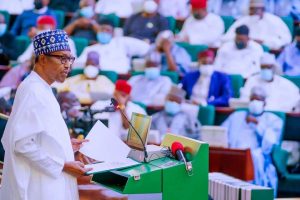
Nigeria to increase spending with new “Budget of Economic Growth and Sustainability”
At a Joint-Session of the National Assembly in Abuja this week, President Buhari delivered his 2022 Budget Speech, presenting what will be his administration’s last full year budget before the 2023 presidential election. To boost economic recovery, the country will be increasing government spending by over 20% to reach $40bn next year, or NGN 16.39 trillion. This will in turn fuel the fiscal deficit, expected to reach 3.39% of GDP in 2022. In response, Nigeria is expected to borrow an additional NGN 5.01 trillion while raising funds from privatization proceeds (NGN 90.73 bn) and drawdowns on loans secured for specific development projects. Expectations are that the 2022 budget will help Nigeria achieved a growth of 4.2% this against, again an IMF forecast of 2.3%. A Bet on Infrastructure To maintain the pace of infrastructure development, especially in critical projects such as roads, ports, airports and power, the budget provides for the strengthening of concessions and PPP frameworks. Nigeria is also expected to explore green finance options as part of its Sovereign Green Bond Programme and to leverage debt-for-climate swap mechanisms. Nigeria was already the first nation to issue a sovereign certified climate bond back in 2017. Expectations from Oil The oil sector will be once again expected to significantly contribute to government revenues with oil production set at 1.88m barrels per day (including condensate) and the price benchmark at $57 per barrel. However, the country has repeatedly missed its oil production target. By July of this year, actual oil revenues were 34% below target while the federal government’s share of oil revenue was 51% below target. It remains to be seen if Nigeria can turn things around and ramp production back up, especially given the lack of investment into its oil infrastructure and ongoing divestments from IOCs. Nigeria produced an average of 1.567m barrels per day (including condensates) in Q3 2021 according to data released by the Department of Petroleum Resources. The country notably had to face a Force Majeure at Shell’s Forcados Terminal from mid-August to mid-September. A Lingering Subsidy Problem Overall, Nigeria’s budget will continue to be affected by a heavy subsidy burden. The collapse of oil prices in 2020 led to the removal of subsidy on petrol (PMS), before it was quickly reinstated this year once prices rose again and pushed the landing price above the regulated threshold of NGN 145/litre. Because of subsidies, Nigeria continues to have the cheapest petrol in West Africa, which in turns significantly erodes revenues that could otherwise allocated for social infrastructure projects. Low petrol prices are also creating serious barriers to promote the adoption and consumption of natural gas across the country.
Read more »
After Oza and Asaramatoru, Decklar considers entry into Emohua Marginal Field
Decklar Resources has announced it has entered into a non-binding letter of intent to purchase all of the issued and outstanding shares of Wesfield Exploration and Production. Westfield E&P is the Nigerian entity that holds a Risk Finance and Technical Services Agreement (RFTSA) with Erebiina Energy Resources, the recent winner of the Emohua Marginal Field (OML 22) during Nigeria’s 2020/2021 Marginal Fields Bid Round. Erebiina is operating the Emohua field with a 60% interest. “Emohua has a considerable infrastructure advantage with existing oil and gas export pipelines in close proximity. This will allow Decklar to use an Early Production Facility (EPF) after the Emohua-1 re-entry well as part of a fast-track development plan to realize near-term cash flow,” the company said in a statement. Decklar has been increasing its footprint across Nigerian marginal fields over the past two years. In 2019, its Nigerian subsidiary Decklar Petroleum entered into a Risk Service Agreement (RSA) with Millenium Oil and Gas Co. to provide technical, financial and operational support needed to develop the Oza Marginal Field on OML 11. Drilling is ongoing there, with the Oza-1 well expected to be put back on production before the end of the year. In July 2021, Decklar continued its acquisition spree by completing a Share Purchase Agreement (SPA) to acquire Purion Energy, the Nigerian entity that holds a RFTSA with Prime Exploration & Production in respect of the Asaramatoru Marginal Field (OML 11). Decklar has so far focused on drill-ready assets located in close proximity to existing and operational oil and gas evacuation infrastructure. “The M&A deals space in Nigeria is very hot at the moment especially onshore and in shallow waters,” said Mickael Vogel, Head of Research at Hawilti. “Investors are especially looking at the market’s brownfield opportunities which offer tremendous upside potential and the ability to cash in very quickly. While everyone is focusing on transactions involving IOCs’ divestments, other juniors and independents are quickly moving to get a foothold over smaller assets that can be put on production within 12 months or less.” Details on the development of the Oza and Asaramatoru Marginal Fields are available in the “Projects” section within your Hawilti+ research terminal.
Read more »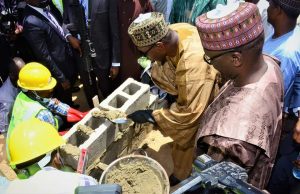
Nigeria’s NNPC has broken ground on 50 MW emergency power project in Borno State
A groundbreaking ceremony was held over the weekend for the 50 MW Maiduguri & Environs Emergency Power Project (MEPP), in presence of Borno State Governor, Prof. Babagana Umara Zulum and the NNPC Group Managing Director Mallam Mele Kyari. The contract for the project had been signed last month with the China Machinery and Engineering Corporation (CMEC) and GE, acting respectively as EPC contractor and supplier of the plant’s gas turbines.
Read more »
Thor Explorations has poured first gold at Nigeria’s flagship gold mine
Over the weekend, Thor Explorations has poured first gold from its Segilola Gold Mine in Nigeria’s Osun State. This is a critical milestone for the project where commercial production is expected in September. Once fully commissioned, the plant will run at a processing rate of 715,000 tonnes per annum, targeting about 85,000 ounces of gold a year. The Segilola Gold Mine has been under development for a few years and will mark a critical milestone in Nigeria’s journey to further diversify away from oil. While its neighbours in West and Central Africa have all successfully developed their mining and minerals industry to support economic growth and create jobs, Nigeria’s mining sector has remained massively under-developed.
Read more »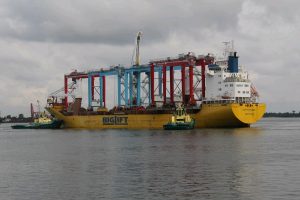
APM Terminals takes delivery of six more RTG cranes for its container terminal in eastern Nigeria
APM Terminals’ West Africa Container Terminal (WACT) in the Onne Oil & Gas Free Zone has taken delivery of six more state-of-the-art Rubber Tyred Gantry Cranes (RTGs), bringing their total number to 14. The new units will further improve service delivery at the Onne Port and confirm WACT as eastern Nigeria’s best-equipped port terminal. In August 2020, WACT had already received the 10,000 TEU Maersk Stadelhorn, the largest containership to evert berth at any Nigerian port. Also last year, APM Terminals had announced further investment of $100m in the terminal’s upgrade Phase 2 including the acquisition of three additional Mobile Harbour Cranes (bringing the total in operation to five), 20 Rubber Tyre Gantry Cranes, three Reach Stackers, 13 terminal trucks and trailers and an empty container handler. The development of WACT started in the mid-2000s in order to open up Nigeria’s eastern market, an under-served region due to its high-risk environment and piracy. The region’s trade infrastructure has considerably increased since then: in addition to WACT, the Philippines’ International Container Terminals Services, Inc. (ICTSI) recently opened the Onne Multipurpose Terminal (OMT) after upgrading and rehabilitating three unused berths at the port.
Read more »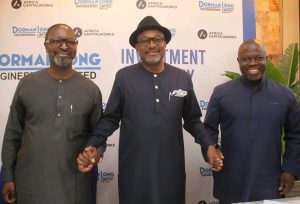
Dorman Long Engineering eyes expansion after equity investment from Africa Capitalworks
Dorman Long Engineering, one of Nigeria’s leading oilfields equipment, structural steel, marine structures engineering and fabrication company has just secured a significant investment from Africa Capitalworks to support its expansion. Established in Nigeria back in 1949, Dorman Long Engineering has grown to be one of Nigeria’s leading industrial and infrastructure development players, notably by servicing the country’s hydrocarbons industry. It operates three manufacturing facilities in Lagos, including one at its head office at Idi-Oro, a galvanising plant in Agege and a waterfront facility at the Navy Dockyard. It has successfully executed major engineering services works, including onshore flow stations and major structural fabrication and erection, amongst others, for almost all oil majors and energy services companies operating in Nigeria. More recently, it was a contractor on the Anyala & Madu fields development for First E&P, where first oil was achieved in October 2020. Each field is developed with an unmanned conductor supported platform (CSP), a novel drilling and development technology deployed in the Niger Delta by Dorman Long Engineering and its partners. The company is currently a subcontractor on Seplat Energy’s 300 MMscfd ANOH gas plant, for which it is in charge of the fabrication of several components. The project is Nigeria’s biggest ongoing gas infrastructure development at the moment. The fresh investment officialised today will support Dorman Long Engineering’s refurbishment of its equipment and help the company increase its regional footprint, Chairman Timi Austen-Peters told Hawilti. By expanding existing yards, acquiring additional facilities and expanding its service offering, the company notably aims to tap into new industries such as solar and hydropower. The entry of Africa CapitalWorks will notably support the roll out of such plans and is likely to see Dorman Long Engineering taking on more work across Nigeria while it ventures into neighbouring markets. Africa CapitalWorks Holdings (ACW) is a relatively new vehicle, launched by the CapitalWorks Group to target mid-market companies in sub-Saharan Africa. CDC, the UK’s development finance institution, is a cornerstone investor into ACW and invested $40m in the company back in August 2017. The other major investor is South Africa’s Public Investment Corporation (PIC).
Read more »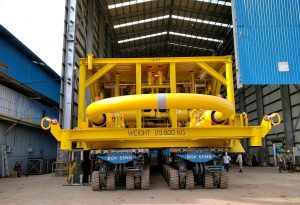
TechnipFMC sees $3bn of subsea opportunities in Africa within 24 months
TechnipFMC sees subsea opportunities across Nigeria and Angola totaling between $3bn and $5bn within the next 24 months, the company said during its Q2 2021 earnings conference call.The subsea market in the region will be heavily driven by TotalEnergies’ projects in Angola. These notably include the development of the Begonia (Block 17/06) and Cameia (Block 21) fields, but also the execution of two subsea tieback projects on producing blocks. These include Cravo, Lirio, Orquidea and Violeta (CLOV) Phase 3 on Block 17 and the ACCE project on Block 31 (an acronym for the Alho, Cominhos and Cominhos East fields). Block 17 has been subject to significant subsea activity recently, with the commissioning of Zinia 2 earlier this year and the ongoing execution of Dalia 3 and CLOV 2. Also offshore Angola, TechnipFMC expects to see contracts awarded for the development of Eni’s recent discovery on Block 15/06. Meanwhile, the integrated energy services provider sees two projects moving forward in Nigeria that could support the subsea market in the country. One is the development of the Preowei field on OML 130, operated by Total and whose field development plan has been approved since 2019. The other one is further development of the Shell-operated Bonga asset on OML 118. In May 2021, new agreements were executed for OML 118 between the NNPC and contractor parties SNEPCo (Shell), ExxonMobil, Total and NAOC (Eni).
Read more »