Country: Nigeria

Worley awarded FEED Phase II contract for Nigeria-Morocco Gas Pipeline
Worley has announced that it has been awarded a contract to provide main front-end engineering design (FEED Phase II) services for the 7,000km Nigeria-Morocco Gas Pipeline (NMGP) project. The feasibility study and FEED Phase I were previously completed by Penspen. The project is led by Morocco and Nigeria’s national oil companies, the Office National des Hydrocarbures et des Mines (ONHYM) and NNPC Ltd. If completed, it would be the longest offshore pipeline in the world. Its FEED study already received financing from the Islamic Development Bank in December 2021. The development bank had then declared that a final investment decision (FID) was targeted for 2023. The pipeline has been on the table for some time and is seen as an extension of the existing West Africa Gas Pipeline (WAGP) that was commissioned in 2011. However, WAGP has been plagued by several operational issues, including unreliable gas supplies from Nigeria and legacy debt payments from off-takers. The NMGP is expected to traverse 13 West African countries and offer African gas producers a new avenue to export their gas to neighboring countries and to Europe. Nigeria, Ghana, Côte d’Ivoire, Senegal, and Mauritania all have discovered gas reserves located offshore. Gas deliveries could be made across the pipeline route to African markets seeking to secure additional gas supplies or exported all the way up to Europe via Morocco. “The overall FEED services will be managed by Intecsea BV, our offshore engineering consultancy business in The Hague, the Netherlands. This includes the development of the project implementation framework and supervision of the engineering survey,” Worley said in a statement. Nigeria holds Africa’s largest gas reserves and is increasingly seeking to monetise it domestically and for exports. On February 16th, Minister of Petroleum Timipre Sylva was in Niger to sign the Niamey Declaration with his counterparts from Algeria and Niger. The agreement seeks to put the Trans-Sahara Gas Pipeline (TSGP) Project back on track – another gas pipeline that would allow Nigeria to export its gas to Europe via Niger and Algeria. Earlier this month, Minister Timipre Sylva also expressed interest in reviving the Brass LNG export terminal project – a 10 mtpa LNG export scheme first discussed in 2003.
Read more »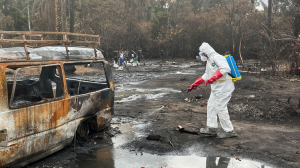
Tragedy hits Niger Delta as illegal bunkering site explosion kills 100
Over 100 people lost their lives last weekend at an illegal crude oil bunkering site at the Abaezi forest, in the Ohaji-Egbema Local Government Area of Nigeria’s Imo state. The illegal oil refining depot bordered Nigeria’s Rivers and Imo states and is one of many such sites operated across the Niger Delta by illegal refiners seeking to profit from the country’s oil reserves. The explosion happened as the government has intensified its crack down on pipeline vandalism and crude theft – which many use to secure the feedstock required for their illegal refining activities. These remain carried out outside any supervision, sometimes with makeshift equipment that often causes fatal accidents and heavy pollution. Several vehicles that were in a queue to buy illegal fuel were reportedly burnt by the fire outbreak that took the lives of over 100 people.
Read more »
Exploration in Angola: find out about the country’s latest bidding round at Cape VIII
On April 5th, the Angolan National Oil, Gas and Biofuels Agency (ANPG) opened a tender for eight oil blocks in the Lower Congo and Kwanza offshore basins. These include Blocks 16/21, 31/21, 32/21, 33/21 and 34/21 in the Lower Congo and Blocks 7/21, 8/21 and 9/21 in the Kwanza Basin. In the presence of Minister of Mineral Resources, Petroleum and Gas, Diamantino Pedro Azevedo and Secretary of State for Oil and Gas José Barroso, the round of offshore blocks piqued the interest of several global oil majors operating in the country. Eni Angola notably submitted a bid for Block 31/21, as operator with a 50% interest, in partnership with Equinor (50%). On its side, TotalEnergies presented a bid proposal for Block 16/21, with a 100% stake. “Knowing that the basins in the bidding have been studied and the investors have been able to prove that our business environment is recommended – and that investors recognise it – and that the ANPG guarantees dialogue and continuous work with operators and with partners who trust Angola, it is something that shows us that we are on the right path and that we must commit more to boost our oil & gas sector and its contribution to the national economy,” commented Paulino Jerónimo, CEO of the ANPG. The bidding round was notably launched a month before the 8th African Petroleum Congress and Exhibition (CAPE VIII), set to take place in Luanda from May 16th-19th. The congress is sponsored by SONANGOL, TOTAL ENERGIES, EXXONMOBIL, CHEVRON, EQUINOR, TRAFIGURA, SOMOIL, SINOPEC, BFA, SNH, BRIMONT, SHEARWATER and is supported by PETAN, OGTAN, AECIPA. Headline topics include, among others, ANPG’s latest bid round, the energy transition, and opportunities and challenges under the new geopolitical paradigm shift. The congress is organized by the African Petroleum Producers Organization (APPO), the government of the Republic of Angola (for the first time), the Angolan National Oil, Gas and Biofuels Agency (ANPG) and AME Trade Ltd. The three-day event will be centered around the theme of “Energy Transition: Challenges and Opportunities in the African Oil and Gas Industry,” and assemble experts from the national, regional, and international energy and oil and gas industries to deliberate the challenges and opportunities of the energy transition and the future of the oil and gas industry in Africa. The congress will be the ideal platform for Africa’s leading oil and gas producers to confront the foregoing challenges and engender solutions to maximize its oil and gas resources. Amid the drive by developed economies towards decarbonization and net-zero policies, attending energy stakeholders will have the opportunity to reinforce the case for regional integrated supply chains and pooling resources to leverage the catalytic power of hydrocarbons in a sustainable manner. Supported by countless multinationals across the energy value chain and national oil companies, CAPE VIII will feature illuminating insight from a range of illustrious keynote speakers, who will position to influence the future landscape of energy in Africa and beyond. Confirmed Keynote speakers notably include: H.E. Diamantino Pedro Azevedo, Minister of Mineral and Petroleum Resources of Angola, President of APPO; H.E. Mahamane Sani Mahamadou Issoufou, Minister of Petroleum, Energy and Renewable Energy Republic of Niger; H.E Gabriel Obiang Lima, Minister of Industry, Mines and Energy of Equatorial Guinea; H.E. Samson Gwede Mantashe, Minister of Mineral Resources and Energy, South Africa; H.E. Dr Matthew Opoku Prempeh, Minister of Energy, Ghana; H.E. Thomas Camara, Minister of Mines, Petroleum and Energy, Ivory Coast; H.E. Didier Budimbu Ntubuanga, Minister of Hydrocarbons, Democratic Republic of Congo; H.E. Mohamed Arkab, Minister of Energy and Mines, Algeria; H.E. Bruno Jean Richard Itoua, Minister of Hydrocarbons, Congo; H.E Vincent de Paul Massassa, Minister of Petroleum, Gas and Mines, Republic of Gabon; Toufik HEKKAR, CEO of Sonatrach, Algeria; Jianqiang Zhang, President, Sinopec Angola; Dr. Omar Farouk Ibrahim, Secretary General, African Petroleum Producers Association (APPO); Ms. Cany Jobe, Director of Exploration and Production, Gambia National Petroleum Corporation; Immanuel Mulunga, Managing Director, Namcor; Edson R Dos Santosi, CEO, SOMOIL ; Dr. Ibrahim Mamane, Directeur Général, SONIDEP ; Osam Iyahen, Vice President, Oil & Gas, Africa Finance Corporation; Bráulio de Brito, Chairman, Angola O&G Service Companies Association (AECIPA); Zakaria Dosso, Managing Director, AEICORP; Matthieu Milandri, Head of Upstream Finance, Trafigura; Yann Pierre Albert Livulibutt Yangari, Independent Consultant; Dr. Babafemi Oyewole, the CEO of Energy Synergy Partners; Tim Dixon, Director and General Manager, IEA Greenhouse Gas R&D Programme. The congress will notably welcome the participation of several African national oil companies (NOCS), including Sonangol (Angola), SNH (Cameroon), SHT (Chad), PETROCI (Côte d’Ivoire), SNPC (Congo), NNPC (Nigeria), Sonatrach (Algeria), GE Petrol and Sonagas (Equatorial Guinea), and SONIDEP (Niger). In this crucial period for the development of the industry in Africa & globally, CAPE VIII presents a unique opportunity to connect with key stakeholders from Africa’s petroleum producing countries.
Read more »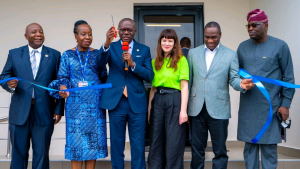
MDXi Data Center has launched Lekki II Data Center expansion
Last week, MainOne further expanded its digital footprint in West Africa by launching its MDXi Lekki II Data Center. The expansion of the MDXi Lekki center by Lagos Governor Babajide Sanwo-Olu notably followed the completion of MainOne’s acquisition by Equinix on April 5th. As a result, MainOne is now an Equinix company. Our plans include further expansion to the Lekki Campus to accommodate the requirements of global hyperscalers and regional businesses as we expand to connect the over 10,000 companies already on the Equinix platform. Funke Opeke, CEO, MainOne.
Read more »
Can African oil producers help the world end reliance on Russian oil and gas?
Unlocking Africa’s oil and gas potential is now imperative against the backdrop of the war in Ukraine and the resulting crude, diesel, and gas supply crunch. This has rendered European dependence on Russian energy untenable, creating a major opportunity for Africa to position itself as a crucial option to increase the supply to the global energy markets. However, significant challenges remain for the continent’s hydrocarbon producers to suddenly ramp up their production due to infrastructure, finance, and technology deficits. Countries with major LNG resources, such as Nigeria, Angola, Libya, and Algeria, suffer from limited and underdeveloped pipeline networks, refineries, jetties, terminals, and ports. Additionally, incentivizing foreign investment is often problematized by a host of risk factors, including political instability, local insecurity issues and financial institutions shifting investments from fossil fuels to renewables. Finally, securing the latest technology to facilitate local content development has proven cost prohibitive given the reliance on foreign intellectual property and the continual brain drain of key local human capital. All the above issues will be discussed at the 8th Africa Petroleum Congress and Exhibition (CAPE VIII) taking place from 16-19 May 2022 in Luanda, Angola. The congress is organized by the African Petroleum Producers Organization (APPO), the government of the Republic of Angola (for the first time), and AME Trade Ltd. The three-day event will be centered around the theme of “Energy Transition: Challenges and Opportunities in the African Oil and Gas Industry,” and assemble experts from the national, regional, and international energy and oil and gas industries to deliberate the challenges and opportunities of the energy transition and the future of the oil and gas industry in Africa. CAPE VIII will unfold against the recession of the global pandemic that exacerbated record production declines across African hydrocarbon producing countries from 2020 to 2021. The annus horribilis was compounded by under-investment in exploration activities, leaving several of the continent’s biggest energy players struggling to cope with the post-lockdown surge in demand for hydrocarbons. Fortunately, APPO’s ambition to establish the continent as an energy hub regained significant headwind with a stellar upstream development outlook for 2022 and beyond. The congress will be the ideal platform for Africa’s leading oil and gas producers to confront the foregoing challenges and engender solutions to maximize its oil and gas resources. Amid the drive by developed economies towards decarbonization and net-zero policies, attending energy stakeholders will have the opportunity to reinforce the case for regional integrated supply chains and pooling resources to leverage the catalytic power of hydrocarbons in a sustainable manner. Supported by countless multinationals across the energy value chain and national oil companies, CAPE VIII will feature illuminating insight from a range of illustrious keynote speakers, who will mold the future landscape of energy in Africa and beyond. Keynote speakers at the conference will include: H.E. Diamantino Pedro Azevedo, Minister of Mineral and Petroleum Resources of Angola, President of APPO H.E. Mahamane Sani Mahamadou Issoufou, Minister of Petroleum, Energy and Renewable Energy Republic of Niger H.E. Samson Gwede Mantashe, Minister of Mineral Resources and Energy, South Africa H.E. Dr Matthew Opoku Prempeh, Minister of Energy, Ghana, H.E. Thomas Camara, Minister of Mines, Petroleum and Energy, Ivory Coast Dr. Omar Farouk Ibrahim, Secretary General, African Petroleum Producers Association (APPO) Ms. Cany Jobe, Director of Exploration and Production , Gambia National Petroleum Corporation Mr. Edson R Dos Santosi, CEO, SOMOIL Dr. Ibrahim Mamane, Directeur Général, SONIDEP Mr. Osam Iyahen , Vice President, Oil & Gas, Africa Finance Corporation Mr. Bráulio de Brito, Chairman, Angola O&G Service Companies Association (AECIPA) Mr. Zakaria Dosso, Managing Director, AEICORP Mr. Matthieu Milandri, Head of Upstream Finance, Trafigura Mr. Yann Pierre Albert Livulibutt Yangari, Independent Consultant Mr. Dr. Babafemi Oyewole, the CEO of Energy Synergy Partners Tim Dixon, Director and General Manager, IEA Greenhouse Gas R&D Programme Confirmed National Oil Companies at CAPE VIII include. SONANGOL, Angola SNH, Cameroon SHT, Chad Petroci, Cote d’Ivoire SNPC, Congo NNPC, Nigeria Sonagol, Angola GE Petrol, Equatorial Guinea Sonagas, Equatorial Guinea CAPE VIII is sponsored by the continent’s leading oil and gas players including: SONANGOL, TOTAL ENERGIES, EXXONMOBIL, CHEVRON, EQUINOR, TRAFIGURA, SOMOIL, BRIMONT, SHEARWATER. Hawilti is a proud Communication Partner of Cape VIII.
Read more »
In this new oil market supercycle, African operators turn to local content for help
Economic recovery, geopolitics and the overall global energy demand and supply have impacted the price of both crude oil and natural gas in the last couple of months. A reality that has gotten genuine industry players working, especially within Africa. On the continent, oil players are ramping up activity first for their domestic markets, and of course to supply international markets that are in dire need of some respite in the face of the uncertainty and chaos caused by the Russian invasion of Ukraine. In this context, agitation and worry will not solve the problems, only strategic business decisions will. It is no news that several oil and gas asset owners in Africa are eager to get their fields to production after three to four years of stagnating performances. But while there is hydrocarbon to be produced and current prices are certainly attractive, the equation will be incomplete without the deployment of the right assets in the hands of the right team. Every day and possibly every hour, a meeting is being held across African energy capitals. In Lagos, Luanda, or Brazzaville, the focus is on investments, project execution, and asset purchase/lease. But how many of these negotiations will transition into profitable and executable ventures? This is not the time to take a chance on new market entrants, but the time to move forward with experienced and verified stakeholders who know what’s at stake and can act quickly. In Nigeria, credible intel has it that the management of West Africa Exploration & Production (WAEP) and General Hydrocarbon Limited (GHL) have formally engaged the Century Group for the development and production of their assets, all in the same week. The former has a substantial interest in OML 71/72 where lies the Kalaekule field, while the latter is the lead stakeholder in OML 120 where it is planning the redevelopment of the Oyo field. In selecting Century Group, both companies have concretely chosen to use the in-country assets of arguably the only Nigerian wholly-owned company providing FPSO solutions at the moment. The company has indeed a proven track record of safe operational framework and of over 30% cost savings even in the heart of the COVID 19 lockdown. When historic times call for urgent solutions, it turns out that local content is the most strategic, prudent, and cost-efficient decision for new hydrocarbons producers like WAEP and GHL. Over the past decade, several Nigerian energy companies have undoubtedly proven that they are energy infrastructure experts and have boosted indigenous capacity and participation. But none has really compared to the Century Group who is now well-positioned to support upcoming projects in the country. And this is just the beginning. More African names like UTM Offshore Limited or PFL Engineering Limited can now be trusted as capable partners to shape the future of the Nigerian energy industry post exit of IOCs. In the same vein, the sale of crucial energy infrastructure should be based first on the criteria of capacity to operate sustainably rather than solely on finance. Nigeria has a huge budget deficit (NGN 6.25tn, or approximately 3.39% of its GDP) and is heavily reliant on foreign debt financing. For an economy that heavily relies on oil, the current reality is a great opportunity to support recovery and help the country meet its fiscal and infrastructural obligations to the citizenry through direct earnings. Let the fields come alive and most of all, let the country’s most competent ones lead the charge.
Read more »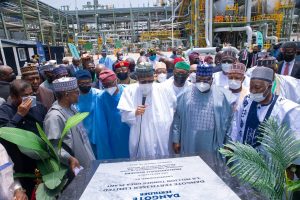
World’s second largest granulated urea plant commissioned in Nigeria
Yesterday, President Muhammadu Buhari commissioned Africa’s largest granulated urea plant and the second biggest in the world in Ibeju Lekki. The Dangote Fertilizer facility has a capacity of 3 million tonnes per annum (mtpa) and is now making Nigeria self-sufficient in fertilizers, with extra capacity reserved for exports. “We have already started exporting to the USA, Brazil, India and Mexico,” Aliko Dangote said during the commissioning ceremony held at the Lekki Free Zone. The $2.5bn twin train facility processes domestic gas to produce urea and ammonia, and is located next to the 650,000 bpd Dangote refinery and petrochemicals complex, where operations are yet to start. Just this month, state-owned NNPC, the Shell Petroleum Development Co. (SPDC) JV and Dangote sealed a new Gas Supply & Aggregation Agreement (GSAA) to supply 70 MMscfd of gas from the Tunu CPF (OML 35) to Dangote Fertilizer. Another GSAA had previously been signed in December 2019 with Chevron Nigeria.
Read more »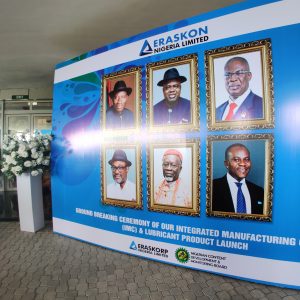
Eraskon Nigeria breaks ground on new industrial manufacturing complex
During a grand ceremony held in Yenagoa earlier today, Eraskon Nigeria has officially broken ground on its 64,000 litres per day lubricants blending plant at Gbarain in Bayelsa State. The groundbreaking was preceded by a ceremony marking the launch of the company’s new ERASKO GOLD lubricants products line. Both functions were attended by key Nigerian officials, including former President Dr. Goodluck E. Jonathan and Engr. Simbi Wabote, Executive Secretary of the Nigerian Content Development & Monitoring Board (NCDMB). Eraskon Nigeria is the company executing the project as a joint-venture between ERASKORP Nigeria and the NCDMB. The facility is expected to be commissioned in December 2022 and will help in meeting increasing domestic demand for high quality lubricants, engine oil, transmission fuels, engine coolers and specialty products such as waxes. “Nigeria consumes 800 million litres of engine oil and lubricants every year and its consumption continues to grow by 5% per annum,” said Engr. Simbi Wabote during the ceremony in Yenagoa. “Nigeria’s in-country blending capacity stands at only 150 million litres so we have a huge gap that remains met by imports,” he added. “Eraskon Nigeria’s project will result in the building of a world-class facility producing a range of high-quality lubricants for the Nigerian market,” declared Maxwell Oko, Vice Chairman and CEO at ERASKORP. “This plant is the first step in realizing our vision to build an industrial conglomerate in the Niger Delta,” he added. The lubricants blending plant is being built on 8ha of land, out of a total 50ha acquired around Shell’s Gbarain gas hub. The company envisions to further integrate its operations in the future by producing drilling and production chemicals, turbine oil and house products such as detergents and aerosols. Gbrain is increasingly emerging as a local content hub housing some of Nigeria’s newest energy infrastructure. The 12,000 barrels per day (bpd) Azikel Refinery is currently nearing completion at the same location, while Rungas expects to commission its LPG composite cylinder manufacturing unit there as well this year.
Read more »
Nigeria’s Sahara Group strengthens governance as it drives expansion
Over the weekend, Nigerian energy and infrastructure conglomerate Sahara Group has announced new strategic appointments to support its expansion across Africa and the rest of the world. The appointments all took effect on March 1st, 2022. The head of the group’s downstream business in Nigeria, Foluso Sobanjo, was notably bumped to Head of Sahara’s downstream operations across Africa. Sahara has been increasingly expanding its investments and presence across key growing markets on the continent and currently runs operations in Nigeria, Ghana, Cote d’Ivoire, Senegal, Guinea, Cameroun, Kenya, Uganda and Tanzania. Last year, the group notably announced the expansion of its petroleum products storage capacity in Tanzania to 72m litres. Equally important, Sahara has reinforced its sustainability governance by promoting its Director of Governance and Sustainability, Pearl Uzokwe, as Director of the Sahara Foundation. Pearl Uzokwe had previously championed Sahara’s energy transition efforts and led the group’s sustainability reporting over the past few years. Finally, and in replacement of Pearl Uzokwe, Sahara has appointed Ejiro Gray as its new Director of Governance and Sustainability.
Read more »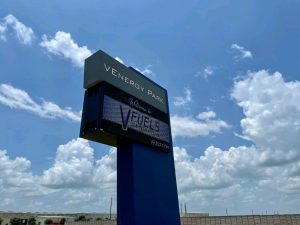
VFuels to offer renewable energy solutions for African oil & gas assets
VFuels LLC, the American oil and gas engineering, design and fabrication firm that has already delivered several modular process equipment on the continent, has entered into a joint-venture agreement with Earth Technologies to develop and install clean energy infrastructure for African oil & gas assets, including refineries. Earth Tehnologies is a renewable energy company with a demonstrated track record in the development, engineering, procurement, construction and consultancy of renewable energy projects. Both companies are maximizing the synergies in their capacities to offer attractive and clean energy solutions for infrastructure owners and operators on the continent. VFuels is a known player in Africa, where it has successfully executed three modular refineries so far. Its first one was commissioned at Ibigwe in Nigeria for Waltersmith Refining & Petrochemical Co. in 2020. The company also recently completed the 10,000 bpd Monrovia Refinery in Liberia for Conex, a Gemcorp portfolio company. It is now at full speed on the construction of the 30,000 bpd Cabinda Refinery in Angola. As VFuels continue to work on expanding Africa’s refining infrastructure, it will now be able to propose clients additional solutions to make their assets more sustainable and reduce greenhouse gas emissions.
Read more »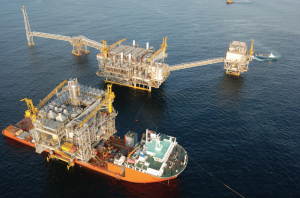
Seplat Energy to triple in size as it proposes to acquire Mobil Producing Nigeria for $1.283 bn
Officialising a transaction that has been in the making for some time, Seplat Energy has announced this morning its proposed cash acquisition of Mobil Producing Nigeria (MPNU) for $1.283bn. Seplat Energy Offshore Ltd, a subsidiary of Seplat Energy, has now entered into the Sale and Purchase Agreement to acquire the entire share capital of MPNU from Exxon Mobil Corporation. The purchase price is set at $1.283bn plus up to $300m contingent consideration, subject to lockbox, working capital and other adjustments. While Seplat expects the transaction to close in the second half of this year, it is still subject to Ministerial Consent and regulatory approvals from the NUPRC and the Nigerian Federal Competition and Consumer Protection Commission. Acquired assets By acquiring MPNU, Seplat Energy takes over Exxon Mobil’s entire offshore shallow water business in Nigeria which includes assets that are very rich in natural gas and gas liquids. The acquisition would increase Seplat Energy’s production by a whooping +186% while increasing its total 2P reserves by +89%. The total portfolio includes a 40% operating ownership of OMLs 67, 68, 70 and 104 and their associated infrastructure. Combined, the assets produced an average of 177,000 boepd gross in 2021 according to NUPRC data. OMLs 67, 68 and 70 form what is known in Nigeria as the “East Area”, where ExxonMobil has executed some of the most successful flaring reduction and valorization projects in the Niger Delta. Such developments notably included the Oso natural gas liquids (NGL) plant commissioned in 1998, and its expansion with the NGL II project in 2008. Both projects also provide gas to the Bonny River Terminal, enabling production of key commodities such as LPG for the domestic and export markets. Last year, the Bonny River Terminal provided some 70,000 metric tonnes of LPG to the local market for instance, making it Nigeria’s second biggest source of domestic LPG supply. On the other side, OML 104 contains the producing Yoho field. The shallow water Yoho development project came on stream in early 2003 and oil is exported via the Yoho FSO terminal. OML 104 has significant undeveloped gas reserves and could potentially see the deployment of a floating LNG (FLNG) unit in the near future. The license for the project was awarded to local company UTM Offshore in 2021. As part of the transaction, Seplat Energy is also acquiring all the aforementioned infrastructure, including the Qua Iboe Terminal, a 51% interest in the Bonny River Terminal and the EAP and Oso natural gas liquids recovery plant. Financing component Seplat Energy will fund its cash acquisition through a combination of existing cash resources and credit facilities. In addition, it is securing a new $550m senior term loan facility and a $275m junior off-take facility. The financing syndicate comprises of both Nigerian and international banks, along with commodity trading companies.
Read more »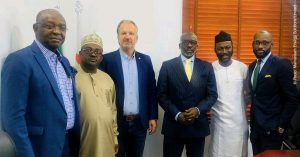
ANDRITZ selected once again for new unit at Jebba hydropower plant
ANDRITZ has announced today it received another order from Nigerian private power generating company Mainstream Energy Solutions (MESL) for the modernization of unit 2G5 at the 578.4 MW Jebba hydroelectric station in Nigeria. ANDRITZ was the original manufacturer for all six fixed blade (propeller) type runners at the hydropower plant, which was commissioned back in the 1980s. The technology group is now working with MESL on a general rehabilitation programme to extend Jebba’s life for the next 40 years and improve the plant’s reliability. In 2021, it had already been awarded a contract for the rehabilitation and life extension of unit 2G6. Jebba is one of two key hydroelectric stations that were privatized and are now operated by MESL under a Concession Agreement. The other facility, Kainji, is also undergoing rehabilitation and expansion. In December last year, MESL selected the Power China Huadong Engineering Corporation for rehabilitation works there, covering the rehabilitation of the Unit 1G9 (80 MW) and the installation of units 1G3 and 1G4 (110 MW each). Full details on the 760 MW Kainji hydropower plant and the 578.4 MW Jebba hydropower plant in Nigeria are available in the “Projects” section within your Hawilti+ research terminal.
Read more »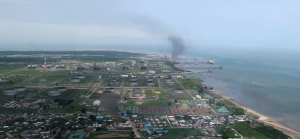
Strong production performance from Shell brings Nigerian oil production back up
Nigeria’s oil and condensate production was up +14% Month-over-Month (MoM) between December and January, latest data from the Nigerian Upstream Petroleum Regulatory Commission (NUPRC) shows. Oil production only was up about +17% and reached almost 1.4 million barrels of oil per day (bopd) at the start of the year. This is a level Nigeria had not seen since early 2021. Source: NUPRC Shell’s infrastructure was responsible for producing and handling 86% of the additional 6.2 million barrels produced in Nigeria between December and January. Notable MoM gains were registered at both oil export terminals operated by Shell, including Bonny (+68.6%) and Forcados (+62.6%). Oil output from the Forcados terminal notably reached a 2-year high last month. But performances also improved at two of the FPSOs that Shell operates in the country: Sea Eagle (+79.7%) and Bonga (+21%). Additional gains were also registered at Eni’s Brass terminal (+21.2%), TotalEnergies’ Odudu-Amenam hub (+20%) and First E&P’s FPSO Abigail-Joseph (+25%). Nigeria has struggle for the whole of 2021 to increase production because of a lack of investment and continued crude theft and vandalism on its infrastructure. In February and March, its allocated production quotas from OPEC are set at 1.701 million and 1.718 million bopd respectively.
Read more »
Shell loses half of its African oil & gas output in only two years
Shell’s production of liquids and natural gas in Africa has been halved in only two years. The major closed 2021 with a liquids production of only 89,000 barrels per day (bpd) from the continent, compared with 183,000 bpd at the start of 2020. Similarly, its African production of natural gas was down to 448 MMscfd in Q4 2021 compared with 784 MMscfd in Q1 2020. Source: Shell quarterly earning results A Focus on African Offshore Only The data represents output volumes for both Nigeria and Egypt, where Shell is currently rationalizing its portfolio. In Egypt, it sold its onshore upstream assets in the Western Desert to a consortium of Cheiron Petroleum Corp. and Cairn Energy in September 2021 for $646m. Meanwhile, it also recently acquired seven new offshore concessions in the West Mediterranean, the Red Sea and the West Nile Delta. Shell’s strategy to exit onshore assets and focus on offshore projects also applies to Nigeria. The company is currently selling its 30% interest in the Shell Petroleum Development Co. joint-venture (SPDC JV). The JV still operates as many as 19 onshore and shallow-water licences, where Shell’s interest represented 60,000 barrels per day (bpd) of liquids and 484MMscfd of gas at the end of 2020. A Decreasing Pipeline of pre-FID African Projects Moving forward, Shell will be focusing only on African LNG projects or deep-water development projects with attractive economics. And their number is limited. In Nigeria, it holds a 26% interest in Nigeria LNG where the already delayed Train 7 project will be adding another 7.6 million tonnes per annum (mtpa) of liquefaction capacity to the Bonny Island LNG export terminal. Related to Train 7 is Shell’s HI Development on OML 144 where it has a 40% interest. HI is expected to produce 75,000 barrels of oil equivalent per day (boepd) and be a major supplier of feedstock to Train 7 once commissioned in the middle of this decade. Finally, Shell confirmed once again in its Q4 2021 earnings results that it continues to explore a few pre-FID options for the further development of its deep-water Bonga asset on OML 118. The PSC for the block was renewed in 2021. As a result, the major continues to study the Bonga Main Life Extension & Upgrade project with a projected peak production of 60,000 boepd and the Bonga North Tranche 1 subsea tie-back project with a projected peak production of 120,000 boepd. Both projects remain attractive because of their ability to add significant production volumes from the existing Bonga FPSO. However, the Bonga South-West/Aparo project, which plans to utilise a brand new FPSO with a capacity of 150,000 bopd, is delayed. Shell recently put the bidding process on hold for the project. While it continues to accept open bids, the major has declared it would not be proceeding with the development in the immediate future.
Read more »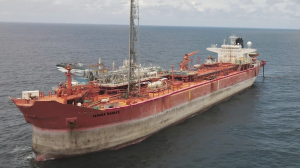
OML 113 transferred to new operating vehicle as partners prepare for gas redevelopment offshore Lagos
After two years of delay, the Nigerian authorities have finally approved PetroNor’s acquisition of Panoro Energy’s subsidiaries in Nigeria, Pan-Petroleum Services Holding BV and Pan-Petroleum Nigeria Holding. The deal was initially inked in October 2019 and had been awaiting government consent since then. Through this acquisition, PetroNor is acquiring Pan Petroleum Aje Ltd, which holds a 6.502% participating interest and 16.255% cost bearing interest in OML 113. This represents a total economic interest of 12.1913% in the license that contains the Aje field offshore Lagos, which produced oil from 2016 to 2021 via the Tamara Nanaye FPSO. Source: DRPC/NUPRC Along with the completion of the acquisition, the Nigeria Upstream Petroleum Regulatory Commission (NUPRC) has also given consent for the transfer of OML 113 to Aje Petroleum AS, a special purpose vehicle owned by Yinka Folawiyo Petroleum (YFP, 55%) and PetroNor (45%). Under the deal, PetroNor will serve as the new technical operator for the redevelopment of Aje into a gas project, on behalf of YFP. The Field Development Plan (FDP) for the new Turonian Aje gas project on OML 113 aims at increasing production to 15,000 barrels of oil equivalent per day (boepd) via the drilling of two new gas producers and one oil producer. It is notably being planned along with the replacement of the Tamara Nanaye FPSO with a new unit able to process increased liquids production and up to 110 MMscfd of gas. This new FPSO could even become a regional field center since it is located around substantial proven resources such as Albian but especially Ogo, a world-class discovery on the neighbouring OPL 310 operated by Optimum Petroleum. The latest plans available had a projected production peak of 26,000 boepd in 2025, with most incremental production being made of gas reserved for power generation and exports through the nearby West Africa Gas Pipeline (WAGP), or supporting LNG production. The partners have set OPEX at about $30m a year, including FPSO bareboat, Operation & Maintenance and G&A. The project is currently at FEED stage and is expecting FID in 2022 at the earliest. Meanwhile, the Tamara Nanaye FPSO stopped producing from the Aje field in November 2021. Hawilti reported earlier this year on its research terminal that the vessel is being refurbished before redeployment at the Kalaekule field on OML 72. It will continue to be operated and maintained by Nigerian services conglomerate Century Group. Details on the development of OML 113 offshore Lagos are available in the “Projects” section within your Hawilti+ research terminal.
Read more »
Lagos State issues pre-qualification notice for the concession of the Lagos Blue Line Rail Project
On Wednesday this week, the Lagos Metropolitan Area Transport Authority (LAMATA) issued a request for application for the pre-qualification of the concession of the Lagos Blue Line Rail Project, which will run from Marina to Okokomaiko. The line is part of the broader Lagos Rail Mass Transit (LRMT) network currently being developed under the Lagos Strategic Transport Master Plan. The development of the master plan was supported and funded by the World-Bank and notably identified 14 Bus Rapid Transit (BRT) corridors, six rail lines and one monorail. While Lagos started with the construction of the bus rapid transit corridors, two of which are already operational, the state is now building two rail lines, known as the Blue and Red ones. The Blue Line counts 13 stations and will run on a 27km East-West axis from Badagry to Marina on Lagos Island. The Red Line will run on a 37km North-South axis from Agbado to Marina and is under-construction after breaking ground in 2021. The Blue Line will be the first to be operational but the project has been split into two phases to ease its development. The first phase is a 12.5km stretch from Mile 2 to Marina that will start operating at the end of 2022 and will function as a proof-of-concept for Lagos’ future metro system. The second phase consists in doing the rail works on the remaining 14.5km stretch. It is for this second phase that the Lagos State Government is now seeking reputable and experienced railway developers, EPC contractors, rolling stock and equipment manufacturers, operators, and financiers. “These service providers will be expected to form Consortia comprising of all the required service providers, and should provide technical, operational and financial capabilities to enhance their qualification,” LAMATA said in its notice. Applications and expressions of interest must be submitted to KPMG by March 2nd, 2022.
Read more »
Africa Finance Corp. attracts fresh capital from Asia and the Middle East
The Africa Finance Corporation (AFC) has raised $400m in a new syndicated loan to support the development of infrastructure on the continent and aid in the post-pandemic recovery. Strong interest from investors led to the offering being 2.5 times oversubscribed, leading to a total facility of $100m above the initial target. This is the AFC’s first three-year facility since 2018. “The proceeds will facilitate upcoming infrastructure projects that address the continent’s developmental challenges,” the AFC said in a statement. Moody’s recently improved its outlook for AFC’s investment grade credit ratings to ‘stable.’ Its senior unsecured ratings at A3 and short-term issuer ratings at P-2 are the second highest of any institution in Africa. Key participating lenders as bookrunners and mandated lead arrangers include Absa Bank, Bank of China (London branch), First Abu Dhabi Bank PJSC, ICBC (London), Mashreq Bank PSC of Dubai, MUFG Bank of Japan, Nedbank (London branch), Rand Merchant Bank (a division of FirstRand Bank, London branch), Standard Chartered Bank and SMBC Bank International, acted as Bookrunners and Mandated Lead Arrangers. On their side, the Korea Development Bank and Standard Bank of South Africa acted as Mandated Lead Arrangers, while MUFG Bank Ltd and ICBC (London) also acted as Facility Agent and Documentation Agent, respectively. Last year, the AFC revealed plans to step up its infrastructure financing in Africa with a new asset management division, AFC Capital Partners. Its debut offering, the Infrastructure Climate Resilient Fund (ICRF) is planning to raise $500m this year and $2bn over the next three years.
Read more »
Nigeria LNG decides to allocate all its LPG supply to the Nigerian market amidst soaring prices
The board of Nigeria LNG (NLNG) approved yesterday the supply of its entire production of propane and butane to the Nigerian market. In September 2019, the company had already decided to increase its domestic LPG supplies from 350,000 tonnes to 450,000 tonnes per year from 2021 onwards. Last year, NLNG’s supplies reached about 400,000 tonnes. A few months ago, Nigeria LNG also supplied its first propane cargo into Nigeria. According to the company, it has developed a scheme to sustainably supply propane for usage in cooking gas blending as well as in agro-allied, autogas, power and petrochemical sectors. Until now, it had only supplied butane cargoes, with initial deliveries starting back in 2007. “These initiatives are designed to increase LPG availability in Nigeria, diversifying its uses and support the Federal Government’s Decade of Gas initiative,” Nigeria LNG said in a statement. The supply and consumption of cooking gas (or LPG) in Nigeria has witnessed a compound annual growth rate (CAGR) of over 20% for several years. As a result, the market successfully absorbed a record of over 1 million metric tonnes (MMT) of LPG in 2020. The government is hoping to reach 5 MMT by 2030. However, soaring global gas prices in 2021 have limited the growth of the sector in a country where over half of LPG supplies are met by imports. As a result of current market conditions, most Nigerians cannot afford cooking gas anymore and are going back to burning wood or using biomass fuels. As a result, supply grew only very modestly last year and did not go much higher than the 1 MMT threshold. To make LPG more affordable, the Nigerian government is incentivizing the growth in local production. A 7.5% VAT was imposed on imported LPG last year despite strong opposition from the industry. However, only a significant rise in domestic output could help offset external vulnerabilities, and hopes are that the full allocation of Nigeria LNG’s production to the domestic market could contribute to bring prices down.
Read more »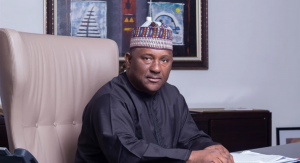
BUA Foods: Why Bet on Nigeria’s Newest FMCG conglomerate
Nigerian capital markets started 2022 with an injection of NGN 720 bn ($1.8bn) following the listing of BUA Foods on the main board of the Nigerian Stock Exchange (NSE). The new company is the result of the consolidation of several of Abdulsamadu Rabiu’s businesses under BUA International, a conglomerate he founded in 1988. While BUA Cement listed in January 2020, several of the group’s other verticals remained unstructured, including sugar refining and plantations, rice, flour milling & pasta production, oil & gas, construction, real estate and logistics. With BUA Foods, Rabiu is betting on Nigeria’s agriculture and fast-moving consumer goods (FMCG) market by consolidating its sugar, rice, flour, pasta and edible oils business into one single entity. BUA Foods combines assets worth almost NGN 650 bn and had generated over NGN 300bn from January to November last year, with a net profit of almost NGN 80 bn. Some of the country’s best institutions were mobilized on the listing operation, including Udo Udoma & Belo-Osagie as solicitors, Stanbic IBTC Capital as lead financial adviser, Rand Merchant Bank Nigeria and UCML Capital as joint financial advisers, APT Securities and Funds and CardinalStone Securities as joint stockbrokers. For investors, BUA Foods offers an interesting and diversified exposure to Nigeria’s FMCG market, expected to grow on the back of strong demographics and a projected population of over 260m by 2030. However, for Rabiu and the entire BUA Group, the challenge is now on navigating the country’s sluggish economic recovery that has left consumer spending at very low levels on the back of historic inflation and rising poverty. In this context, BUA Foods’ confidence comes from its investment into some of the country’s most basic and needed goods. Despite a weak consumer disposable income and high poverty rates, the case for the growth of Nigeria’s consumer goods industry remains compelling. This is notably the case for staple foods such as bread, pasta, rice and cereals where growth is modest but positive even in the short-term. BUA Foods also has policy on its side. Through the Central Bank of Nigeria (CBN), the government has constantly sought to boost local output by restricting access to foreign exchange for dozens of imported items. These notably include food and agricultural products such as rice, palm oil, vegetable oil, and margarine – precisely the ones the company is investing in. Betting on import-substitution with sugar In sugar, BUA Foods now gathers the Apapa and Port Harcourt sugar refineries with a total refining capacity of 1.5 million metric tonnes per annum (mtpa), along with 70,000 ha of plantations in the states of Kogi (Bassa Sugar Co.) and Kwara (LASUCO Sugar Co.). With such assets, Rabiu wants to be part of the execution of the Nigerian Sugar Master Plan (NSMP) that seeks to cut sugar imports and grow local output. BUA Foods’ new sugar division is notably expected to commission this year a new 220,000 tonnes per annum (tpa) sugar refinery on its LASUCO plantation in Lafiagi (Kwara) with a daily crushing capacity of 10,000 tonnes of cane per day (tcd). The refinery will also be able to produce 20m litres of ethanol a year, and 32 MW of electricity from bagasse, making it Nigeria’s most integrated sugar complex. The project received a $200m boost from the Africa Finance Corporation last year, and remains one of Nigeria’s most ambitious and vertically-integrated facility. Positioned for long-term growth in flour In flour, BUA Foods will need to operate in a market where demand has been heavily impacted by the Covid-19 pandemic but where long-term growth fundamentals remain robust. The market remains heavily marked by imports of wheat and is dominated by well-established players such as Flour Mills of Nigeria, Honeywell Flour Mills and Crown Flour Mills (Olam). To compete and grow, BUA Foods’ flour division can rely on a flour milling complex in Rivers State with a capacity of 500,000 tonnes per annum (tpa). The facility is currently being expanded to 1.3 mtpa by Turkish contractor Milleral Integrated Millin Systems, with commissioning expected no later than this year. On the verge of leadership in pasta In pasta, BUA Foods inherited from an industrial complex in Port Harcourt made of one pasta factory plant with a capacity of 250,000 tpa. This is currently being increased to 500,000 tpa with the addition of a second factory built by Italian contractor FAVA. Upon commissioning, it will make BUA Foods Nigeria’s second-largest pasta producer. While rice dominates the Nigerian market, pasta consumption has been on the rise and Fitch Solutions notably forecasts market revenue to to experience double digit growth until at least 2026. Ambitious expansion plans in rice In rice, BUA Foods is constructing a rice milling facility with an initial capacity of 200,000 tpa, and a rice plantation of about 10,000ha in Kano. Both assets will make the company the largest rice milling business in Nigeria and are expected to start operating this year. With rice, Rabiu bets once again on an attractive import-substitution business. Rice is the third-most consumed staple food in Nigeria after maize and cassava, but while Nigeria is Africa’s second largest rice producer, it is also the world’s third largest rice importer. Moving forward, the company wants to expand its rice milling business to a combined 1 mtpa with the installation of new rice milling facilities in Gujungu (Jigawa State) and a rice mill and plantation in Agaie (Niger State). While the market is dominated by the likes of Olam International, TGI (Wacot Rice) and Stallion, the size of the cake is big enough for everyone. However, BUA Foods’ success will depend on its ability to improve seed quality and adopt better farming techniques to support output growth and competitive margins. An ambition to resuscitate a defunct edible oils business In edible oils finally, BUA Foods inherits from two palm oil mills in Kano and Lagos with a capacity of 250,000 tpa. However, neither facility is operational and the new edible oil division is expected to resuscitate them by 2024
Read more »AfDB approves $210m for Nigeria’s Special Agro-Industrial Processing Zones
On Monday, the Board of Directors of the African Development Bank (AfDB) approved a $210m loan to co-finance Phase 1 of Nigeria’s Special Agro-Industrial Processing Zone Programme. This is the one of the AfDB’s most ambitious operations in supporting African agriculture to date. The facility is made of an AfDB loan of $160m along with an Africa Growing Together Fund loan of $50m. It is provided with co-financing from other partners such as the Islamic Development Bank and the International Fund for Agricultural Development, in the amount of $538.05m. Phase of Nigeria’s Special Agro-Industrial Processing Zone Programme targets the states of Cross River, Kaduna, Imo, Kano, Kwara, Ogun, Oyo and the country’s Federal Capital Territory of Abuja. It aims at unlocking the country’s agriculture sector potential by promoting industrialization through the development of strategic crops such as cassava and rice, and beef and dairy livestock. “The project areas account for 19% of Nigeria’s total land mass and will benefit 50.4 million people,” the AfDB said. “The zones are designed to concentrate production, processing, storage, transport and the marketing of commodities – like cotton or maize to increase productivity and competitiveness and reduce logistics costs.” In total, the AfDB plans to establish 18 such zones across Africa as part of its Feed Africa Strategy.
Read more »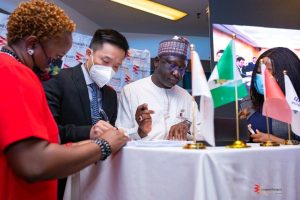
Mainstream Energy Solutions selects contractor for an additional 300 MW at Kainji hydropower plant in Nigeria
Mainstream Energy Solutions (MESL) signed a contract yesterday in Abuja with Power China Huadong Engineering Corporation for rehabilitation works at its Kainji hydroelectric facility in Nigeria. MESL has been operator of the 760 MW Kainji hydropower plant and the 578.4 MW Jebba hydropower plant in Nigeria since their privatization in 2013. The contract signed yesterday covers the rehabilitation of the Unit 1G9 (80 MW) and the installation of units 1G3 and 1G4 (110 MW each) at Kainji. Rehabilitating Nigeria’s First and Oldest Hydropower Facility Kainji can accommodate a total of 12 turbine-generator units but originally consisted in only eight of them, numbered from 5 to 12. Combined, these are able to support 760 MW of generation capacity. The first of those units were commissioned in 1968, making the facility Nigeria’s first and oldest hydropower plant. When MESL acquired the station in 2013 and became its private concessionaire, Kainji’s available capacity was at 0 MW. Since privatisation, five units were successfully rehabilitated (units 5, 6, 7, 11 and 12) and the plant currently operates with 520 MW of capacity connected to the grid. Unit 7 was the last one to be rehabilitated and was connected to the Nigerian grid in Q4 2021. The contract signed yesterday with Power China Huadong Engineering Corporation will notably focus on rehabilitating a sixth turbine-generator (unit 9) to bring back another 80 MW online. This will eventually leave only two of the original eight units to be recovered and rehabilitated: unit 8 and unit 10. Expansion from New Units While the facility is already widely seen as a true success story of Nigeria’s power privatisation programme, more can be done. The project with Power China Huadong Engineering Corporation will indeed see the installation of two new units of 110 MW each. In doing so, MESL is going back to the original design of the power plant which provided for the accommodation of units 1 to 4. These never materialized, but the required civil structure and open pits are still in place to do so. The two new turbine-generator units will represent the initial unit 3 and unit 4 and add another 220 MW of generation capacity to the complex. The agreement signed yesterday is significant and will eventually see Kainji’s available generation capacity increase from 520 MW today to 820 MW in the near future. Moving forward, MESL still has the opportunity to recover units 8 and 10, representing a combined 160 MW, and install units 1 and 2 to add another 220 MW. In total, the Kainji facility could ultimately support up to 1.2 GW of clean power generation for the Nigerian grid. Details on the Kainji and Jebba hydropower plants in Nigeria can be found in the “Projects” section within your Hawilti+ research terminal.
Read more »
American digital infrastructure company Equinix to acquire MainOne for $320m
Equinix has revealed yesterday its intention to expand into Africa by acquiring African data center and connectivity solutions provider MainOne. The acquisition is valued at $320m and is expected to close in Q1 2022. By acquiring MainOne, Equinix would gain a strong foothold in Nigeria, Ghana and Côte d’Ivoire where MainOne has already built data centers. The Nigeria-based company currently has three operational data centers in West Africa, with an additional facility in Ghana currently under construction. MainOne also owns and operates an extensive submarine network extending 7,000 kilometers from Nigeria to Portugal, as well as 1,200 kilometers of reliable terrestrial fiber network across southern Nigeria. The American company sees the move as its first step towards its long-term strategy of becoming a leading African carrier neutral digital infrastructure company. Under the terms of the transaction, MainOne’s management team, including CEO Funke Opeke, will continue to serve in their respective roles.
Read more »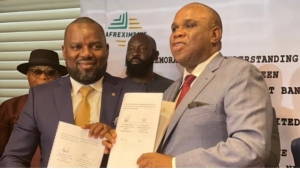
UTM Offshore signs $2bn MoU with Afreximbank for Nigeria’s first FLNG project
Nigerian marine and services group UTM Offshore and the African Export-Import Bank (Afreximbank) have signed a Memorandum of Understanding (MoU) to raise $2 billion for the development of Nigeria’s first floating liquefied natural gas (FLNG) project. The MoU was signed yesterday in Abuja by Julius Rone, Group Managing Director/CEO of UTM Offshore and Dr. Benedict Okey Oramah, President and Chairman of Afreximbank. “This is a landmark project that Afreximbank takes very seriously,” Afreximbank’s president said. The agreement paves the way for additional collaboration between UTM Offshore and the Afreximbank to support a future final investment decision (FID) on UTM’s FLNG project. The company has been studying and conceptualising the development of an FLNG in Nigeria since 2020. In February 2021, it received a License to Establish (LTE) from Nigeria’s former Department of Petroleum Resources (DPR) for the installation of an FLNG unit on oil mining lease (OML) 104. The block is operated by the joint-venture of Mobil Producing Nigeria (operator, 40%) and the state-owned Nigerian National Petroleum Corp. (NNPC, 60%) and contains the producing Yoho field. Preparations for the project are now in full swing and benefit from robust global and technical expertise. The pre-Front End Engineering Design (Pre-FEED) contract was awarded to JGC Corporation of Japan in May and completed in October. KBR was appointed Owners Engineer while global energy and commodities trader Vitol has also joined the consortium as off-taker for the LNG. “The UTM Offshore FLNG will be the first such project developed by an African company on the continent. It will also significantly contribute to the Nigerian government’s agenda of reducing the flaring of associated gas across our industry. As Africa’s FLNG industry grows, we are well positioned to offer attractive project economics by developing shallow water gas reserves, while bringing significant environmental benefits to our industry as a whole.” Julius Rone, Group Managing Director/CEO, UTM Offshore The project notably involves the development and financing of a 1.2m tonnes per annum FLNG facility with a capacity to process 176 MMscfd of natural gas and condensate. The unit would target the processing of associated gas currently flared in order to cut carbon emissions and monetise additional reserves for the domestic and global markets. UTM Offshore is pioneering the development of the FLNG facility in collaboration with LNG Investment Management Services (LIMS), a subsidiary of the state-owned Nigeria National Petroleum Corporation (NNPC). Details on the UTM FLNG can be found in the “Projects” section within your Hawilti+ research terminal.
Read more »