Country: Angola

Eyes on the Prize: African exploration is back!
Independents and international oil companies (IOCS) have finally spudded several much-awaited exploratory wells in Africa this quarter. They signal the resumption of exploratory drilling activity, in a continent that remains heavily under-explored. While Eni has led exploratory efforts this year so far with three discoveries in Angola (Cuica), Ghana (Eban) and Côte d’Ivoire (Baleine), additional operators have now taken the lead in hopes of closing 2021 with even more success. Bamboo-1X, FAR, The Gambia Drilling commenced in mid-November at Bambo-1 offshore The Gambia. Operator FAR Ltd is targeting three key prospects there: Soloo, Bambo and Soloo Deep. Resources are estimated at a maximum of 1.118 billion barrels and chances of success range between 7% to 37%. Drilling is executed by Stena Drillmax Ice. In case of a discovery, FAR has indicated that 90m barrels would be the set minimum economic field size. Its success case planning relies on a development of 150m barrels of oil via a 48,000 barrels of oil per day (bopd) floating, production, storage and offloading (FPSO) vessel. Three wells would then support production, gas and water injection operations. FAR is operator with a 50% working interest in the A2 and A5 permits with its joint venture partner, PC Gambia Ltd (50%), a subsidiary of Petroliam Nasional Berhad (PETRONAS). Jove Marine-1X, Petronas, Gabon Petronas spudded the Jove Marine-1X well in block F13 offshore Gabon in early November 2021. The Malaysian national oil company hopes to replicate its 2018 success with its nearby Boudji discovery. Drilling is executed by the Maersk Viking. Jove-1X is testing a four-way dip closure in the pre-salt Gamba and Dentale formations in the distal portion of the Lower Congo Basin. A discovery there would be welcomed news for Gabon after disappointing results from BW Energy’s exploration campaign earlier this year in the same area. Ondjaba-1X, TotalEnergies, Angola Activities at TotalEnergies’ Ondjaba prospect in Block 48 offshore Angola started back in October 2021. The well was drilled by the Maersk Voyager, which has since then moved to Namibia where it is currently drilling the Venus prospect. The Ondjaba-1 exploratory well was expected to reach 3,628m, setting a new world record. Block 48 is operated by TotalEnergies (40%) along with Angola’s national oil company SONANGOL (30%) and Qatar’s national oil company Qatar Petroleum (30%). Venus-1X, TotalEnergies, Namibia Venus-1X was spudded earlier this week offshore Namibia within Block 2913b, by the Maersk Voyager. The well will target an enormous middle Cretaceous basin floor fan at the toe of the Orange river delta, targeting a potential of 1 billion barrels of oil. Venus is one of two wells that, if proved successful, would significantly transform Namibia’s energy landscape and economy. Block 2913b is operated by Total E&P Namibia B.V. along with Qatar Petroleum (30%), Impact Oil and Gas (20%), and NAMCOR (10%). Graff-1X, Shell, Namibia November also marked commencement of exploratory drilling on PEL 39 offshore Namibia. The license is held by Shell and contains the Graff prospect. Like Venus, Graff is located within the Orange Basin and close to the South African maritime border. The Valaris DS-10 is mobilized for the campaign and is expected to then move to São Tomé-e-Principe to drill Jaca-1X on Block 6. PEL 39 is operated by Shell Namibia Upstream BV (45%) along with partners Qatar Petroleum (40%), and NAMCOR (10%). Sibiri-1X, Seplat Energy, Nigeria Last but not least, Seplat Energy is targeting the 78m barrels Sibiri prospect on OML 40 in Nigeria. The Sibiri exploratory well (previously known as Amobe) is one of the few exploration prospects being drilled in the country this year and is expected to help further increase the resource base on OML 40 where the wells on the Gbetiokun field are currently producing a peak of 12,000 barrels of oil per day (bopd). Preparatory activities for drilling of the high-impact prospect have been ongoing for a while. According to Seplat Energy, Sibiri carries a risked best estimate gross prospective oil resource of 78m barrels. The operator has already evaluated several options to accelerate the development of the discovery and achieve first oil in the event of exploration success. OML 40 is operated by the Nigerian Petroleum Development Company (NPDC, 55%) along with its partner Elcrest Exploration and Production Company Limited (Elcrest, 45%). Elcrest is itself a Joint Venture between Eland Oil and Gas (Nigeria) Limited (45%) and Starcrest Nigeria Energy Limited (55%). Seplat Energy acquired Eland Oil and Gas in 2019.
Read more »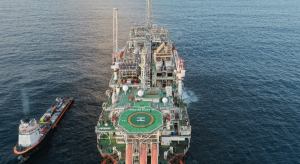
bp achieves first oil from subsea tieback project on Block 18 in Angola
bp has announced start of production from its Platina project on Block 18 offshore Angola. The field was brought online ahead of schedule and under the contractor’s group initial budget. The block is operated by bp Angola (Block 18) B.V. (36.34%) along with BP Exploration Beta (9.66%), Sonangol SSI (7.72%), and Sonangol E&P (16.28%). The project will develop an estimated 44m barrels of oil reserves and add 30,000 barrels of oil per day (bopd) to Block 18 production once it reaches its peak in 2022. In its 2022 budget, Angola expects Block 18’s output to grow by over 45% next year thanks to Platina. The field will contribute to reversing Angola’s production decline next year and bring back oil GDP to positive after six consecutive years in the red. The development by bp of the offshore Greater Plutonio area within Block 18 in Angola was the British major’s first operated asset in the country. Commissioned in 2007, the project initially developed five fields (Galio, Cromio, Paladio, Plutonio, and Cobalto) in water depths ranging from 1,200 to 1,450 m. The Greater Plutonio floating, production, storage and offloading (FPSO) vessel has a maximum throughput capacity of 240,000 barrels of oil per day (bopd), with a storage capacity of 1.77m barrels. Source: Ministry of Finance, Angola Block 18 forms part of Sonangol’s ongoing partial divestment process. The national oil company is currently divesting up to 8.28% in the license, which received one of the highest number of bids. Interested parties notably include Namcor, Falcon Oil, Somoil and MTI Energy. Details on the development of Block 18 offshore Angola are available in the “Projects” section within your Hawilti+ research terminal.
Read more »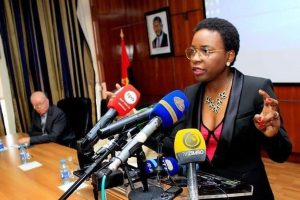
Angola’s Oil GDP to be back to positive in 2022 after six consecutive years in the red
Since 2012, Angola’s Oil GDP has grown only twice: in 2012 and 2015. But it is expected to grow again by +1.6% next year on the back of a projected marginal increase of about 2% in oil & gas output. Source: Angola’s Finance Ministry 2022 Budget Bets on 18,000 bopd Production Growth In its 2022 Budget Statement, Angola expects some of its existing producing offshore assets to support a marginal production growth of 18,000 barrels of oil per day (bopd) on average. Growth would notably come from BP’s Block 18 (+45.1%), Somoil’s Block 2/05 (+44.5%), Eni’s Block 15/06 (+7.9%), and Chevron’s Block 0 (+2.1%). Block 18 is expected to see the most incremental production growth thanks to the coming onstream of the Platina subsea tieback project, where drilling started in late 2020. The project targets the development of 44m barrels of oil reserves to add about 20,000 bopd of production to the block’s daily output. The integrated Engineering, Procurement, Construction and Installation (iEPCI™) contract for the project was awarded to TechnipFMC. On its side, Eni should achieve peak production from the Ndungu and Cuica fields, where first oil was achieved respectively in May 2019 and July 2021. The Italian major is also expected to complete phase 2 of its Agogo subsea tieback project, where first oil was achieved in January 2020. As a result, Angola is betting on average oil production of 1,147,910 bopd next year, up from a projected average of 1,130,090 in 2021. Natural gas production is also expected to increase by 4.2% to 134,100 barrels of oil equivalent per day (boepd). Source: ANPG Meanwhile, oil production will keep decreasing in other key producing assets but at a lesser pace than previous years. On Block 15, ExxonMobil is notably expected to start its drilling campaign next year, while TotalEnergies will also drill in Blocks 17 and 31 and put its Caril Pop-Up project onstream in Block 32. Consequently, production will decrease by “only” -9.6% in Block 15, -1.3% in Block 31, and -0.5 in Block 17, according to Angola’s Finance Ministry. Additional production on the back of strong oil prices necessarily mean that Angola will make money next year. The country is in fact expecting over 6 trillion kwanzas in oil revenue in 2022. This is about the same as what it will collect this year, but almost double its oil revenue of 2020. Details on all of Angola’s offshore oil blocks and projects are available in the “Projects” section within your Hawilti+ research terminal.
Read more »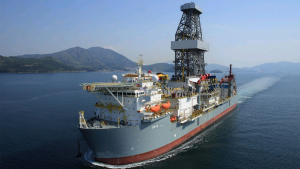
ExxonMobil to resume drilling offshore Angola in June 2022
ExxonMobil’s affiliate in Angola has just awarded Valaris a two-year contract for drillship VALARIS DS-9. The rig is to be reactivated and mobilized to Angola in June 2022. This marks the resumption of drilling activities for ExxonMobil in Angola following a June 2019 agreement with National Agency for Petroleum, Gas and Biofuels (ANPG) to further invest in the development of Block 15. While ExxonMobil has deployed four floating, production, storage and offloading (FPSO) units on Block 15 in 2004, 2005 and 2008, the license offers significant potential for redevelopment to tap into remaining reserves. In the first nine months of 2021, the block exported an average of 158,000 barrels of oil per day (bopd) according to data from Angola’s Ministry of Finance. To facilitate further development, the block’s 11 development areas were merged into only four in 2019. Additional investment is expected to unlock about 40,000 bopd of additional production and generate 1,000 local jobs as expansion projects get executed. ExxonMobil’s multi-year drilling program on the block is expected to involve 17 wells in phase one, followed by about 20 wells in phase 2.
Read more »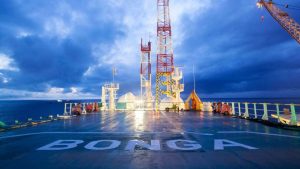
TechnipFMC sees $3bn of subsea opportunities in Africa within 24 months
TechnipFMC sees subsea opportunities across Nigeria and Angola totaling between $3bn and $5bn within the next 24 months, the company said during its Q3 2021 earnings conference call. This remains in line with its previous estimate released at the end of Q2. Angola to the front The subsea market in the region will be heavily driven by TotalEnergies’ projects in Angola. These notably include the development of the Begonia (Block 17/06) and Cameia (Block 21) fields, with subsea projects values of at least $250m for both. Block 21 is notably the location of one of TotalEnergies’ future production hubs with the pre-FEED for a new floating, production, storage and offloading (FPSO) unit awarded to Yinson earlier this year. Future subsea projects by TotalEnergies in Angola also include the execution of two subsea tieback projects on producing blocks: Cravo, Lirio, Orquidea and Violeta (CLOV) Phase 3 on Block 17 and the ACCE project on Block 31 (an acronym for the Alho, Cominhos and Cominhos East fields). The latter is expected to be the biggest of the pack, with a value of $500m to $1bn. Block 17 has been subject to significant subsea activity recently, with the commissioning of Zinia 2 earlier this year and the ongoing execution of Dalia 3 and CLOV 2. Hawilti’s own research sourced from the Hawilti+ research terminal further shows that Angola will be remaining sub-Saharan Africa’s biggest subsea market in the medium-term. In July 2021, Italian major Eni notably requested expressions of interest for the Agogo full field development on Block 15/06, including the provision of an FPSO system. “Several new production hubs are in the making offshore Angola while producing blocks have received a series of incentives to develop marginal and satellite fields,” said Mickael Vogel, Head of Research at Hawilti. “Infrastructure-led exploration has also proven a very successful strategy in the country and is expected to continue, especially in Block 15/06 and Block 17.” A possible recovery in Nigeria Meanwhile, TechnipFMC sees two projects moving forward in Nigeria that could support the subsea market in the country. One is the development of the Preowei field on OML 130, operated by TotalEnergies and whose field development plan has been approved since 2019. The other one is further development of the Shell-operated Bonga asset on OML 118. In May 2021, new agreements were executed for OML 118 between the NNPC and contractor parties SNEPCo (Shell), ExxonMobil, Total and NAOC (Eni). However, a big question at the moment remains what future Bonga development project will be approved first: Bonga North or Bonga South-West/Aparo. Full details on ongoing and future projects offshore Angola and Nigeria are available in the “Projects” section within your Hawilti+ research terminal.
Read more »
Erdoğan’s African tour: a win-win partnership?
On Sunday, Turkish President Recep Tayyip Erdoğan began his African tour which will take him to Togo, Nigeria and Angola. The visit will marked by trade and security agreements, but it also takes place in a context of tensions involving other powers, in particular France. This will be the 15th time Erdoğan has stepped on African soil as Turkey’s top leader. As President, he has done several short, but regular, journeys which began in 2004 when he was still Prime Minister, and which saw him visit, among others Ethiopia, Tunisia, South Africa, Libya, Somalia, Niger, Senegal and Ghana. By the time he completes his ongoing visit, he will have been to 30 African countries. These relational approaches are far from unilateral, since one notes, for example, that the last 5 presidential visits received by Turkey are African (Angola, Guinea, Sudan, Ethiopia, DRC). Erdoğan also received two weeks ago, Moussa Faki, president of the AU Commission. The discussions focused on issues of infrastructural, economic and human development, mediation, culture, trade, and also humanitarian aspects. In fact, the bilateral trade volume between the two parties has practically increased fourfold in 18 years, going, according to the Turkish Ministry of Commerce, from $ 5.3 bn in 2003 to more than $20 bn today. Turkish investments have also grown in Africa in recent years, going from $ 100m in 2003 to $ 6.5 bn in 2017 (infrastructure, schools, hospitals, etc.). At the same time, the number of Turkish embassies in Africa has increased from 12 to 41. The arrival yesterday of Recep Tayyip Erdoğan precedes the 3rd Turkey-Africa Cooperation Summit which will be held from October 21 to 22 in Istanbul and which will bring together the 54 countries of the continent through official representatives or the private sector. It will be followed on December 17th by the 3rd Turkey-Africa Partnership Summit. The multiplication of African embassies in Anatolia and flights between the two destinations will greatly facilitate things. In the meantime, there is talk of reaching a trade volume of half a billion dollars between Turkey and Angola (currently $ 116 m), along with progressing joint counterterrorism initiatives and executing agreements on hydrocarbons and energy with Nigeria, then economic and defense agreements with Togo.
Read more »
Total Eren signs Shareholders Agreement for 35 MW solar PV project in Angola
Sonangol, Total Eren, and Greentech – Angola Environment Technology Ltd (Greentech) have announced that they executed last week the Shareholders Agreement establishing their partnership on the 35 MWp Quilemba Solar project in Angola. According to the agreement, Sonangol will be acquiring a 30% interest in Quilemba Solar Lda, while Total Eren and Greentech will own 51% and 19% respectively. The plant will be constructed in Lubango, capital of Angola’s Huíla Province. It has been in the making since late 2020, when Total Eren and Greentech signed a Memorandum of Understanding (MoU) with the Angolan Ministry of Energy and Water (MINEA) for the its construction and operation. Quilemba Solar is one of many utility-scale solar projects currently being developed in Angola, in line with the country’s vision to commission up to 500 MW of renewable energy capacity between 2022 and 2025. Italian major Eni is also involved in the development of a 50 MW solar PV plant in the country at the Bibala Municipality in the Namibe Province under a joint-venture with Sonangol called Solenova. Earlier this year, the consortium of Sun Africa, MCA Solar Angola and Hitachi ABB Power Grids also broke ground on 370 MW of solar PV projects in the country. These are split across seven different facilities now under-construction, including the 188.88 MWdc Biopioa solar plant and the 96.70 MWdc Benguela solar plant. Last month, Sun Africa took its commitment to Angola a step further with the signing of a memorandum of understanding for the development of Africa’s largest mini-grid and rural electrification project at a cost of $1.5bn. Full details on Sun Africa, Total Eren and Solenova’s solar projects in Angola are available in the “Projects” section within your Hawilti+ research terminal.
Read more »
Angola has already surpassed its oil revenue target for 2021
With a new record-high oil revenue in Q3 2021, Angola has collected over Kz 4.2 tn in oil revenue this year so far, data compiled by Hawilti from the country’s Ministry of Finance shows. This is already higher than its oil revenue target of Kz 4.059 tn set within its 2021 budget. “In the first nine months of 2021, Angola had already collected more revenue from oil than it did in twelve months in 2019 and 2020,” said Mickael Vogel, Head of Research at Hawilti. Angola is known for being conservative and realistic in its budget estimates and had set its oil price reference for the year at $39/bbl. In comparison, the Girassol Blend started the year at $55.84/bbl on average in January and stood at over $74/bbl on average in September, according to OPEC data. This explains why despite decreasing output, Angola has posted a strong performance in oil revenue collection this year. Source: Ministry of Finance The country’s total ordinary petroleum receipts comprise of the IRP (petroleum income tax), the IPP (tax on petroleum production), the ITP (tax on petroleum transactions) and additional concessionaire’s revenue. Angola’s ability to meet its oil revenue target notably contrasts with that of Nigeria. Just last week, President Buhari declared that the Federal Government of Nigeria’s share of oil revenue was 51% below target as of July 2021 due to disappointing production levels. However, and despite strong oil revenue collection, Angola’s oil sector continues to underperform due to lack of investments in the past decade. Oil production in 2021 was initially budgeted at an average of 1,220,400 bopd before it was revised down in the middle of the year to 1,193,420 bopd.
Read more »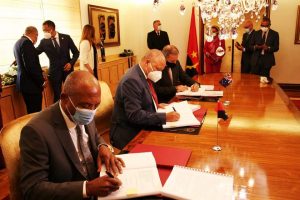
World’s second-largest mining company enters Angolan diamond mine
Last week in Lison, Angola’s Ministry of Mineral Resources, Petroleum & Gas and Angola’s national diamond company Endiama signed a mining investment contract with Rio Tinto for the Chiri diamond concession in the Lunda Norte Province in northern Angola, at the border with the Democratic Republic of Congo (DRC). The negotiations had been ongoing since late 2018 for the 108km2 concession. The contract covers a period of 35 years and provides for an initial participation of 75% by Rio Tinto in a new joint-venture with Endiama (25%) on the licence. The Angolan company could eventually increase its stake to 49%. Rio Tinto has declared that works would start immediately at the mine, with first production expected in 2024. Source: BNA Angola is the world’s sixth largest diamond producer and diamonds represent the country’s second biggest source of export earnings after oil and liquefied natural gas (LNG). The country has been increasing efforts to revive the sector and attract investments in a bid to diversify the economy, support industrialization and grow foreign exchange revenue sources.
Read more »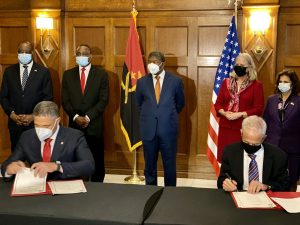
Sun Africa is mobilising over $2 bn for Angola’s solar industry
Earlier this year, the consortium of Sun Africa, MCA Solar Angola and Hitachi ABB Power Grids broke ground on 370 MW of solar PV projects in Angola. These are split across seven different facilities now under-construction, including the 188.88 MWdc Biopioa solar plant and the 96.70 MWdc Benguela solar plant. These are developed under a $650m integrated solar project that sees Sun Africa acting as developer while the MCA Group is the EPC contractor and Hitachi ABB Power Grids the original equipment manufacturer. The scheme benefits from a €560m export credit from Sweden and is also financed by K-Sure of South Korea and the Development Bank of Southern Africa (DBSA). The facilities will be mostly supplied by Swedish contractors, from substations to steel frameworks, with Hitachi ABB Power Grids in Sweden delivering 50% of the Swedish scope of work. The rest will come from NEXTracker’s facility in Fremont (California) and Sun Africa’s facility in Miami (Florida). But Sun Africa took its commitment to Angola a step further this week with the signing of a memorandum of understanding for the development of Africa’s largest mini-grid and rural electrification project at a cost of $1.5bn. The MoU was signed between Angolan Minister of Energy and Water João Baptista Borges during a roundtable organized by the US Chamber of Commerce, in the presence of Angolan President João Lourenço. The project targets increased electrification rates in the provinces of Namibe, Cuando Cubango, Huila and Cunene via the development of mini-grid solar systems and the construction of new substations. The U.S. Exim Bank is expected to provide the bulk of financing. According to the International Energy Agency, less than half of Angola’s population had access to electricity in 2019. While the country has so far mostly relied on hydropower and thermal sources of energy, it also has a high solar resource potential, and its average annual global radiation is estimated at between 1370 and 2100 kWh/m2/year. With this resource, Angolan authorities believe they could install a solar power generation capacity of 55,000 MW. Details on the Benguela and Biopio solar PV facilities are available in the “Projects” section within your Hawilti+ research terminal.
Read more »
Eni puts Cabaça North on stream on Block 15/06 offshore Angola
Following Cuica in July this year, Eni has now achieved first oil from Cabaça North on Block 15/06 offshore Angola. Both fields are tied back to the Olombendo FPSO commissioned back in 2017 to initially develop the Cabaça Southeast and Cabaça Central UM8 fields on the license’s East hub. While Cabaça North was always going to be part of the East hub’s second phase of development, several additional fields were discovered by Eni over the past three years and are now being successfully tied-back under the company’s “infrastructure-led” exploration strategy (ILX). Source: MinFin Angola Ndungu will be the next discovery to achieve first oil within the coming months but tied back to the N’Goma FPSO on the block’s West hub. Meanwhile, Cabaça North will help in maintain output from Block 15/06 where production averaged only 100,000 bopd in H1 2021 compared to a combined capacity of 180,000 bopd across both FPSO vessels. Block 15/06 remains a very lucrative asset for Eni and Sonangol with strong upside potential. As of December 2020, 142.2m barrels had been produced from the West Hub (N’Goma FPSO) with remaining reserves estimated at 174m barrels, while 85.7m barrels had been produced from the East Hub (Armada Olombendo FPSO) where remaining reserves were estimated at 159.8m barrels. As part of its ongoing Partial Divestment Process, Sonangol is currently negotiating the sale of up to 10% of its interest in Block 15/06. Angola is currently sub-Saharan Africa’s most dynamic deep-water subsea market with majors such as TotalEnergies, Eni and BP involved in several subsea tiebacks and infill projects to maintain and increase output from existing production hubs. The country continues to be faced with declining output despite recent increase in production in July and August. Angola has produced an average of 1.143m barrels of oil per day (bopd) between January and August this year according to the ANPG. Its OPEC quota for September is set at 1.348m bopd. Full details on Block 15/06 are available in the “Projects” section within your Hawilti+ research terminal. More information on the Angolan oil & gas market is also available in Hawilti’s latest H1 2021 report on Angola.
Read more »
Angola lays first stone for new Barra do Dande Ocean Terminal
Yesterday, Sonangol has officially laid the foundation stone for its landmark Barra do Dande Ocean Terminal (Terminal Oceânico da Barra de Dande, TOBD) in the Bengo Province north of Luanda. The infrastructure project has been in the making since 2013 but delayed several times by years of recession since 2016. It represents a massive step forward for Angola’s downstream sector and aims at turning Barra do Dande into the country’s main platform for the receiving, storage and distribution of petroleum products. Its official launch follows the award of key contracts this month to its EPCC contractor, the Brazilian Odebrecht, along with the supervision contract to DAR Angola and the Environmental Impact Study to SOAPRO. The terminal will be developed in phases and at a cost of $500m (Kz. 317 bn), ultimately targeting the construction and installation of 29 storage tanks connected to maritime infrastructure such as breakwater, berths and unloading lines. Its phase 1 will include 16 tanks with a combined storage capacity of 582,000 m3 of petroleum derivatives including diesel (320,000 m3), gasoline (160,000 m3) and LPG (102,000 m3) reserved for the domestic market, and will support 3,500 jobs during its construction phase. It involves three different units: the first one covers the development of the 16 storage tanks while the second one involves the construction of a petroleum products and LPG pipeline and the third one the construction of two berths with a total capacity of 150,000 DWT. A second phase will add an additional 13 tanks to bring total storage capacity to 782,500 m3 and enable the export of surplus petroleum products. The project fully integrates with Angola’s vision to expand downstream infrastructure. The country is currently expanding its Luanda Refinery while building three new refining facilities with the private sector at Cabinda, Soyo and Lobito. Once commissioned, these will be producing a surplus of petroleum products that can be exported by pipeline or ship to regional and global markets. Upon completion of those brownfield and greenfield projects, Angola will have multiplied its refining capacity by x9 and will be one of sub-Saharan Africa’s biggest refining hubs.
Read more »
Sonangol posts $4bn loss for 2020
Angola’s national oil company Sonangol has posted a net loss of Kz 2,383,978,740,444, or the equivalent of $4.1bn for 2020. The crash of oil prices last year along with Sonangol’s impairments were the major reasons behind losses last year. The company continues to be involved in a major restructuring and divestment effort in order to rationalize its operational footprint and prepare for an IPO before 2025. Earlier this year, Sonangol notably launched its Partial Divestment Process (“Processo de Alienação Parcial”) to generate cash for the state coffers by divesting stakes in some of Angola’s key producing offshore blocks along with producing licenses in shallow water and offshore exploration zones. Deals on offer include up to 8.28% in Block 18, up to 10% in Block 15/06 and Block 31, 15 to 20% in Block 3/05 and Block 4/05, 30 to 65% in Block 5/06 and 30 to 70% in Block 23 and Block 27. Supported by the recovery in oil prices, this divestment exercise has generated significant interest amongst E&P players: while proposals were to be submitted by August 6th, Sonangol had to extend the deadline to access the data room until August 20th and extended the submission deadline to September 20th.
Read more »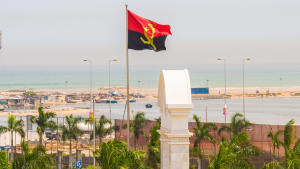
Moody’s upgrades Angola’s long-term issuer ratings
Moody’s Investors Service had just upgraded the Government of Angola’s foreign and local currency long-term issuer rater from Caa1 to B3 while maintaining a stable outlook for the country. Moody’s upgrade follows the improvement of Angola’s credit profile on the back of stronger governance and better fiscal management. In particular, Moody’s expects a continued improvement in the country’s fiscal metrics and liquidity and funding risks, especially because of higher oil prices and a stable exchange rate with the Kwanza. As a result, Angola’s local currency (LC) and foreign currency (FC) country ceilings have been raised to B1 and B3 from B2 and Caa1 respectively. “Assuming that oil prices remain around $65/barrel this year and next and around $45-65/barrel in the medium term, with a relatively stable kwanza, Moody’s expects the government debt-to-GDP ratio to decline to 95% this year and below 80% in 2023, from 122% in 2020,” Moody’s said in a statement yesterday. The company further expects the debt-to-GDP ratio to approach 60% by 2025 while the debt-to-revenue ratio could fall to around 300% from 586% last year. A positive improvement is notably seen in the country’s liquidity risks. While Angola’s government borrowing requirements rose to almost 18% of GDP in 2020, they are expected to go down to below 10% of GDP in 2021 and 2022. This is notably the result of continued debt restructuring efforts along with fiscal consolidation. Source: MinFin Finally, the country’s external position can now rely on the stabilization of its exchange rate, with the Kwanza relatively stable at AOA 650/USD since the end of 2020 compared with AOA 165/USD at the end of 2017. While the exchange rate’s liberalization has been an eventful journey, the currency is stabilizing as oil prices recover, which in turns improves Angola’s external position. “Moody’s expects the current account surplus to exceed 5% of GDP in 2021 and to remain in surplus in the coming years. This is explained in part by the rebound in oil prices but also by the structural reduction in the import bill,” explains.
Read more »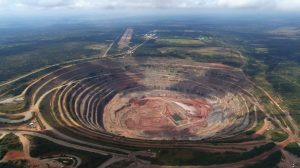
Angola produces 3.1m carats of diamonds in four months
From January to April 2021, the country produced the equivalent of 620 kilos of diamonds, with the goal of reaching 9.1 million carats by 2022. Angola produced a total of 3.1 million carats of diamonds (620 kg) from January to April this year. This is a reasonable performance given the impact of the Covid-19 pandemic, said Alexandre Garrett, director of the Planning and Statistics Office of the Ministry of Mineral Resources, during a local forum on the banking and mining sectors. Angola will continue to support operators to increase diamond production and reach the target of 9.1 million carats (1,820 kg) by 2022, he added. Also present at the forum, Canga Xaquivuila, director of the Angolan Institute of Geology, said his organization would further develop the country’s significant mineral resources. “The geological institute acts as a gateway, not only to examine and improve the quality and quantity of existing minerals, but also to pave the way for new discoveries and contribute to the revitalisation of the sector, with the objective that it becomes more integrated and adapted to a good business environment”, Xaquivuila said. With a production of 8 million carats per year, Angola is now ranked fifth in the world among diamond-producing countries.
Read more »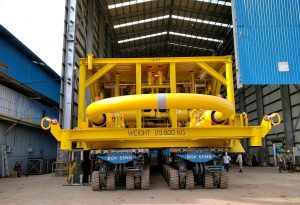
TechnipFMC sees $3bn of subsea opportunities in Africa within 24 months
TechnipFMC sees subsea opportunities across Nigeria and Angola totaling between $3bn and $5bn within the next 24 months, the company said during its Q2 2021 earnings conference call.The subsea market in the region will be heavily driven by TotalEnergies’ projects in Angola. These notably include the development of the Begonia (Block 17/06) and Cameia (Block 21) fields, but also the execution of two subsea tieback projects on producing blocks. These include Cravo, Lirio, Orquidea and Violeta (CLOV) Phase 3 on Block 17 and the ACCE project on Block 31 (an acronym for the Alho, Cominhos and Cominhos East fields). Block 17 has been subject to significant subsea activity recently, with the commissioning of Zinia 2 earlier this year and the ongoing execution of Dalia 3 and CLOV 2. Also offshore Angola, TechnipFMC expects to see contracts awarded for the development of Eni’s recent discovery on Block 15/06. Meanwhile, the integrated energy services provider sees two projects moving forward in Nigeria that could support the subsea market in the country. One is the development of the Preowei field on OML 130, operated by Total and whose field development plan has been approved since 2019. The other one is further development of the Shell-operated Bonga asset on OML 118. In May 2021, new agreements were executed for OML 118 between the NNPC and contractor parties SNEPCo (Shell), ExxonMobil, Total and NAOC (Eni).
Read more »